Phase 1 vs. Phase 2 ESA: What’s the Difference?
When a commercial property transaction or redevelopment project involves environmental history, understanding the phase 1 vs phase 2 environmental site assessment distinction is where due diligence starts. These assessments serve different purposes, follow different methods, and produce different outcomes. Choosing the wrong one, or skipping one when it’s needed, can leave buyers, lenders, and developers exposed to contamination liabilities they had every opportunity to avoid.
Phase 1 and Phase 2 environmental site assessments (ESAs) work sequentially. A Phase 1 reviews property history and current conditions to identify recognized environmental conditions (RECs). If RECs are found, a Phase 2 follows to confirm whether contamination is present and define its extent. Understanding the difference between Phase 1 and Phase 2 ESA shapes every decision that follows, from transaction structure to remediation budgets to regulatory timelines.
Key Takeaways
- A Phase 1 ESA identifies potential environmental concerns through record reviews, site inspections, and interviews. No physical sampling or laboratory testing is involved.
- A Phase 2 ESA is triggered by certain Phase 1 findings and involves soil, groundwater, or vapor sampling to confirm whether contamination is present.
- Not every Phase 1 leads to a Phase 2. A clean Phase 1 with no RECs is often sufficient for a transaction to proceed.
- Both assessments follow ASTM standards and support compliance with EPA’s “all appropriate inquiries” rule under CERCLA.
- Phase 2 costs and timelines vary significantly based on site complexity, contamination type, and sampling scope required.
- ESA findings affect buyers, lenders, developers, and investors differently. Understanding those effects early is central to managing environmental risk.
What Is an Environmental Site Assessment (ESA)?
An environmental site assessment (ESA) is a formal investigation of a property’s environmental condition used to identify potential or confirmed contamination before a real estate transaction, financing decision, or redevelopment project. ESAs follow ASTM standards and satisfy the EPA’s “all appropriate inquiries” requirement under CERCLA, which governs environmental liability in commercial property transfers.
Our environmental site assessment services are built around CERCLA. Completing a compliant ESA before purchase is one of the steps necessary to qualify for statutory defenses against environmental liability.
Purpose of Environmental Site Assessments
ESAs exist to identify environmental liabilities before they become a buyer’s or developer’s problem. They protect buyers from inheriting contamination they didn’t create, help lenders understand the risk profile of properties they’re financing, and give developers a clear picture of what site conditions may require before work begins.
Why ESAs Matter in Real Estate Transactions
Most commercial lenders require at least a Phase 1 ESA before extending financing. Contamination discovered after closing often means the new owner carries the cleanup obligation regardless of who created the problem. Under CERCLA’s strict, joint, and several liability framework, prior owners, current operators, and lenders can all be drawn into liability. But that can all be avoided with a properly completed ESA.
Understanding Phase 1 and Phase 2 ESA at a Glance
| Assessment Factor | Phase 1 ESA | Phase 2 ESA |
|---|---|---|
| Primary Objective | Identify potential environmental concerns | Confirm presence and extent of contamination |
| Physical Sampling | No | Yes |
| Site Inspection | Yes | Yes |
| Historical Records Review | Extensive | Limited |
| Laboratory Testing | No | Yes |
| Regulatory Database Review | Yes | Yes |
| Cost | Lower | Higher |
| Timeline | Shorter | Longer |
| Trigger for Assessment | Initial due diligence | Findings from Phase 1 ESA |
| Risk Level Addressed | Potential risk | Confirmed risk |

What Is a Phase 1 Environmental Site Assessment?
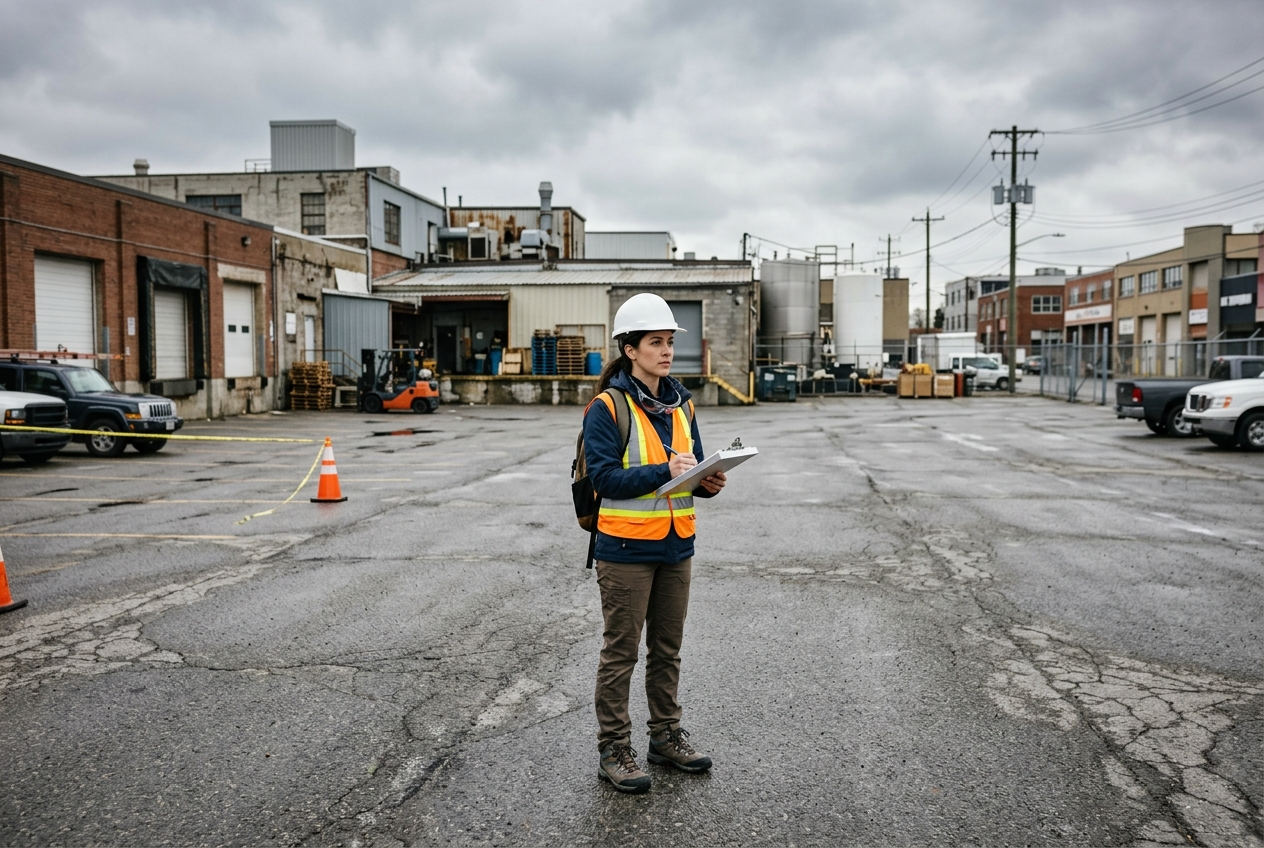
A Phase 1 environmental site assessment is a non-intrusive investigation. No samples are collected and no laboratory testing is performed. The process relies on record reviews, a site visit, and interviews to identify recognized environmental conditions that may warrant further investigation.
Phase 1 ESAs follow ASTM E1527-21, the current standard for this type of assessment, which took effect in February 2023. Completing a Phase 1 that meets ASTM and EPA requirements is one of the steps toward satisfying the “all appropriate inquiries” rule and qualifying for CERCLA liability protections.
Key Components of a Phase 1 ESA
Site reconnaissance involves an in-person visit to observe current conditions: hazardous materials storage, underground storage tanks, soil staining, distressed vegetation, and other visible concerns. Historical document review covers aerial photographs, fire insurance maps, city directories, and prior ownership records documenting how the property and adjacent sites have been used over time. A regulatory database search then identifies whether the property or neighboring sites appear on federal and state lists, including Superfund sites, leaking storage tank registries, and hazardous waste generator records. Interviews with owners, occupants, and local agency representatives can surface information that doesn’t appear in any written record.
Interviews and Property Research
Interviews with current and prior owners, occupants, and local agency representatives can surface information that doesn’t appear in any written record: disposal practices, spill incidents, and historical uses that predate available documentation. Undocumented site uses are a frequent source of the environmental conditions that Phase 2 investigations find.
Identifying Recognized Environmental Conditions (RECs)
A recognized environmental condition (REC) is the presence or likely presence of hazardous substances or petroleum products in, on, or at a property due to a release or likely release into the environment. RECs are the finding that determines whether a Phase 2 is needed. Common RECs include evidence of underground storage tanks, proximity to a known contamination source, historical industrial or dry cleaning use, or conditions observed during site recon that may have been caused by a release of some sort.
ASTM E1527-21 also distinguishes historical recognized environmental conditions (HRECs) and controlled recognized environmental conditions (CRECs). If no RECs are identified, the Phase 1 typically concludes that no further investigation is warranted. When RECs are identified, the report recommends a Phase 2.
What Is a Phase 2 Environmental Site Assessment?
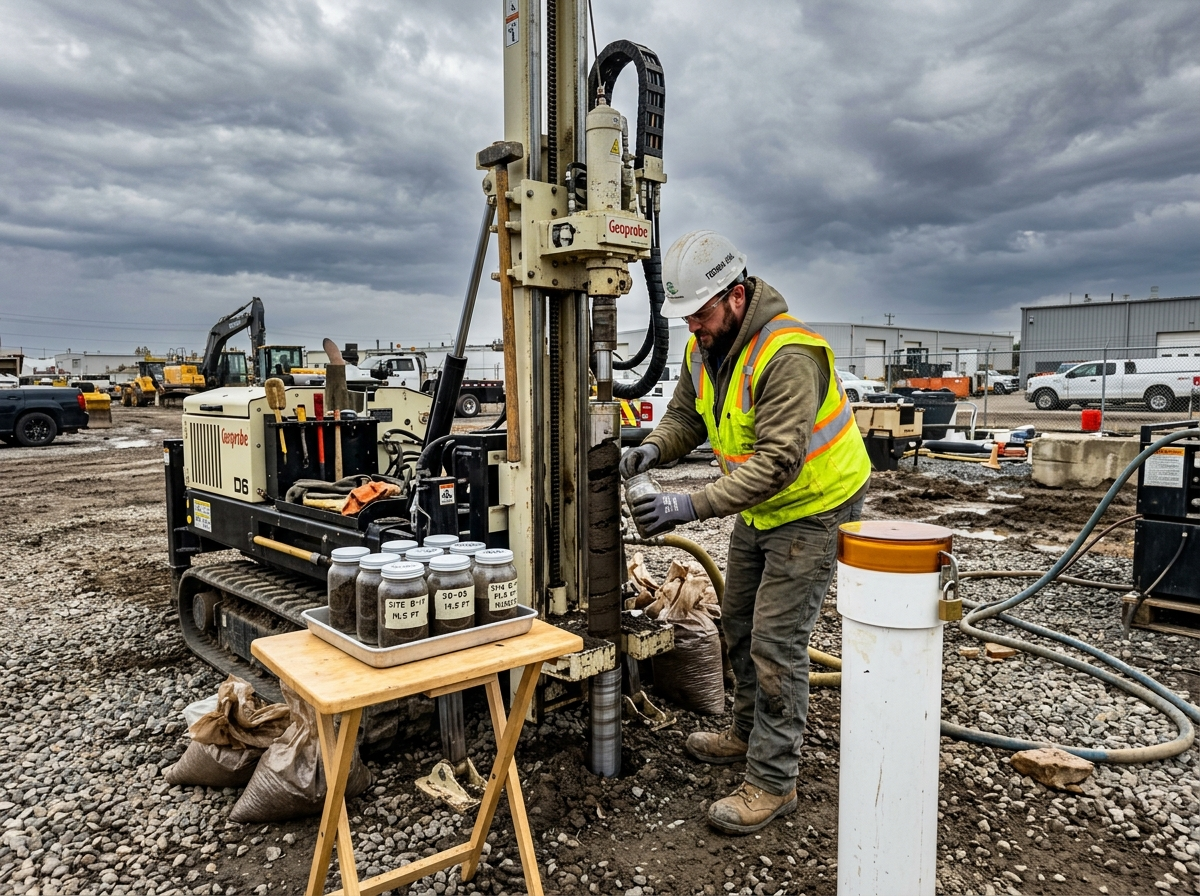
A Phase 2 environmental site assessment moves from records and observation to physical investigation. Samples are collected, laboratory analysis is performed, and contamination is empirically confirmed or ruled out. Phase 2 work is always triggered by findings from a Phase 1.
When a Phase 2 ESA Is Required
When is a Phase 2 ESA needed? The answer depends on what the Phase 1 finds. A Phase 2 is warranted when a Phase 1 identifies one or more RECs that cannot be resolved through additional record reviews or interviews. The environmental professional’s Phase 1 report will specify whether a Phase 2 is needed and what types of sampling would address the identified concerns.
When RECs are identified, if a Phase 2 is skipped, the buyer accepts the risk of unknown contamination, typically without any CERCLA liability protection.
Environmental Sampling and Testing
Phase 2 sampling scope is defined by the Phase 1’s findings. Soil sampling involves drilling to collect material from multiple depths at specific site locations. Groundwater sampling requires the installation of monitoring wells. Vapor intrusion investigation may be conducted where volatile organic compounds are a concern. All samples go to accredited laboratories, with specific analytes selected based on the suspected contamination type: petroleum hydrocarbons, volatile organic compounds, metals, pesticides, or other chemicals of concern. Sampling methods, chain-of-custody documentation, and laboratory qualifications all determine whether results can be relied upon in regulatory proceedings or legal disputes.
Interpreting Phase 2 Results
Laboratory results are evaluated against applicable federal and state regulatory standards, which vary by state and often differ based on intended future use. Where results exceed applicable standards, additional work is required before development or sale can proceed. A deal involving a property with no contamination detected can move forward. A property with confirmed contamination levels above regulatory thresholds requires a decision: remediate, renegotiate price, hold the transaction, or walk away.
Phase 1 vs Phase 2 Environmental Site Assessment Comparison
| Comparison Category | Phase 1 ESA | Phase 2 ESA |
|---|---|---|
| Scope of Work | Preliminary investigation | Detailed environmental investigation |
| Intrusive Activities | None | Drilling, sampling, testing |
| Environmental Data Collection | Observational | Analytical |
| Regulatory Compliance Role | Due diligence | Risk confirmation |
| Property Transaction Impact | Initial screening | Contamination verification |
| Decision Outcome | Proceed or investigate further | Remediation or risk management planning |
Common Situations That Trigger a Phase 2 ESA
Phase 2 investigations are most often prompted by these site conditions and histories:
- Former gas stations and fuel storage facilities, where underground storage tanks may have leaked petroleum products into soil and groundwater
- Industrial and manufacturing properties, including machine shops, plating operations, and chemical processing facilities
- Dry cleaning facilities and chemical storage sites, which have high rates of solvent contamination in soil and groundwater
- Properties with historical contamination records, including sites that appear on regulatory database lists
- Sites with visible environmental concerns identified during Phase 1 reconnaissance, such as staining, drums, or distressed vegetation
- Brownfield redevelopment projects, where prior industrial or commercial use is a known factor and environmental conditions must be characterized before planning proceeds
Cost Comparison Between Phase 1 and Phase 2 ESA
| Cost Factor | Phase 1 ESA | Phase 2 ESA |
|---|---|---|
| Typical Project Cost | Lower | Higher |
| Field Work Requirements | Minimal | Extensive |
| Laboratory Testing Costs | None | Significant |
| Equipment Requirements | Limited | Specialized |
| Consultant Time | Moderate | High |
| Cost Variability | Low | High |
Phase 1 ESA costs generally range from $1,500 to $6,000 for a standard commercial property, with most assessments falling between $2,000 and $4,000. Phase 2 costs are far more variable. A targeted investigation at a property with a single suspected area of concern may run $10,000 to $20,000. A comprehensive Phase 2 at a large industrial site with multiple contamination sources and deep groundwater involvement can go much higher.
Proactive environmental due diligence always reduces long-term costs. Identifying contamination before purchase allows buyers to negotiate price adjustments or require sellers to remediate. Discovering contamination after closing puts the new owner in a far more difficult position, with cleanup obligations that were not priced into the transaction.
Timeline Comparison: How Long Does Each Assessment Take?
| Timeline Factor | Phase 1 ESA | Phase 2 ESA |
|---|---|---|
| Planning Stage | Short | Moderate |
| Site Inspection | 1 Day | Multiple Days |
| Data Collection | Limited | Extensive |
| Laboratory Analysis | Not Required | Required |
| Report Preparation | Faster | More Detailed |
| Overall Completion Time | Shorter | Longer |
A Phase 1 ESA can typically be completed in two to four weeks, depending on historical record availability and scheduling for the site visit and interviews. Phase 2 timelines are less predictable, but generally longer. Laboratory turnaround commonly runs two to four weeks for standard analyses (longer for specialized testing) and regulatory review requirements add still more time. A straightforward Phase 2 at a single-issue site might close in six to eight weeks; a multi-media investigation with groundwater involvement can take months. For time-sensitive transactions, building Phase 2 time into the due diligence schedule before a purchase agreement is signed gives all parties the flexibility to complete the work properly.
Regulatory Standards Governing ESAs
ASTM Standards
The current standard for Phase 1 ESAs is ASTM E1527-21, which took effect in February 2023 and replaced E1527-13. It clarified the definition of recognized environmental conditions, added HREC and CREC categories, and incorporated emerging contaminants including PFAS as a non-scope consideration. Compliance is required to satisfy the EPA’s “all appropriate inquiries” rule and qualify for CERCLA liability protections, including the innocent landowner, contiguous property owner, and bona fide prospective purchaser defenses. An ESA that doesn’t meet ASTM and AAI requirements doesn’t provide the liability protection the buyer expects.
Federal and State Environmental Regulations
The EPA oversees environmental liability under CERCLA and sets the federal standards for All Appropriate Inquiries through 40 CFR Part 312. State environmental agencies add another layer: state cleanup standards govern what contamination levels require remediation and vary significantly across jurisdictions. Environmental professionals conducting Phase 2 assessments must evaluate results against the specific standards applicable where the property is.

How ESA Findings Affect Property Transactions
For Property Buyers
ESA findings are a negotiating tool as much as a risk assessment. A Phase 1 identifying RECs gives the buyer grounds to request a Phase 2, renegotiate the purchase price, require the seller to remediate, or withdraw from the deal. A Phase 2 test confirming contamination typically includes a remediation cost estimate that can be used to adjust the offer or structure escrow arrangements. Buyers who waive their right to perform an ESA lose the ability to claim no knowledge of contamination, which exposes them to CERCLA liability they could have avoided.
For Developers
ESA findings directly affect project feasibility, timeline, and budget. Contamination requiring remediation before construction adds cost and time that weren’t in the original pro forma. Remediation may involve soil excavation and disposal, groundwater treatment systems, or institutional controls such as deed restrictions that limit what can be built. State agencies in some jurisdictions also require formal regulatory approval before a contaminated site can be closed, even after remediation is complete.
For Lenders and Investors
Lenders evaluate ESA findings from a collateral risk perspective. Confirmed contamination may reduce property value below the loan amount, and regulatory requirements can affect transferability. Most commercial lenders require Phase 1 ESAs as a condition of financing and will require Phase 2 when Phase 1 findings warrant it. Contaminated properties may qualify for brownfield redevelopment incentives that can partially offset remediation costs, but those programs carry their own due diligence and compliance requirements.
What Happens After a Phase 2 ESA?
When Phase 2 results fall below applicable regulatory thresholds, the transaction or project can move forward with a documented record that identified concerns were investigated and found to be within standards. When contamination is confirmed above those thresholds, remediation options depend on contamination type, extent, and intended future use. Common approaches include soil excavation and disposal, in-situ treatment, groundwater pump-and-treat systems, and institutional controls. Most states require regulatory reporting once contamination above specified thresholds is discovered, so cleanup cannot proceed without agency oversight. Where contamination extent is unclear, delineation studies or additional monitoring wells may be needed before remediation planning can begin.
Choosing the Right Environmental Consulting Partner
Environmental assessments are only as reliable as the professionals who conduct them. Experience with regional contamination types, familiarity with state regulatory programs, and a track record of producing defensible, technically sound reports all matter when results affect major financial decisions. Data quality determines whether ESA findings hold up under review by regulators, lenders, or opposing parties in litigation.
Higgins and Associates has supported clients through the full spectrum of outcomes for over three decades, from clean Phase 1 closings to complex multi-phase investigations that require regulatory coordination and remediation planning. If you’re evaluating a property or planning a project that involves environmental risk, we’re available to help you think through next steps:
- EHS for Property Transactions and Redevelopment
- EHS Consulting for Healthcare
- Industrial Hygiene and Safety Consulting
- Contact Us
FAQs
Can a property transaction close before a Phase 2 ESA is completed?
A transaction can legally close before a Phase 2 is completed, it’s just risky. Closing without a Phase 2 when one is warranted means the buyer loses the ability to claim they completed all appropriate inquiries, which is required for CERCLA liability protection. Some buyers choose to close with a Phase 2 ongoing, using escrow arrangements or price holdbacks to manage the financial risk. Lenders may or may not allow this depending on their underwriting requirements.
Does a Phase 1 ESA expire, and when should it be updated?
Under ASTM E1527-21, a Phase 1 ESA is considered current for 180 days after the report date if all components have been updated within one year. A Phase 1 conducted more than six months before closing should be reviewed and, if necessary, updated. Significant changes in site conditions or regulatory database listings may also warrant an update regardless of the date.
Are residential properties ever required to undergo a Phase 2 ESA?
Yes, but they’re less common. A buyer purchasing a home on a former industrial site, near a known contamination plume, or with specific environmental indicators may have grounds to request one as part of due diligence.
Can environmental contamination lower a property’s market value?
Yes, practically always. How much depends on contamination type and extent, remediation cost and timeline, any restrictions on use, and local market conditions. Buyers who identify contamination in due diligence typically negotiate price adjustments that reflect these factors.
What is the difference between a Brownfield assessment and a Phase 2 ESA?
A brownfield is a property where the presence or potential presence of hazardous substances complicates reuse or redevelopment. A Phase 2 ESA is the technical tool used to characterize contamination at such a site. EPA’s Brownfields Program provides grant funding to help communities assess and clean up these properties, and Phase 2 ESAs are a standard part of that process. The brownfield designation relates to regulatory and funding context, not a different type of investigation.