What Does an EHS Specialist Do and Why Every Organization Needs One
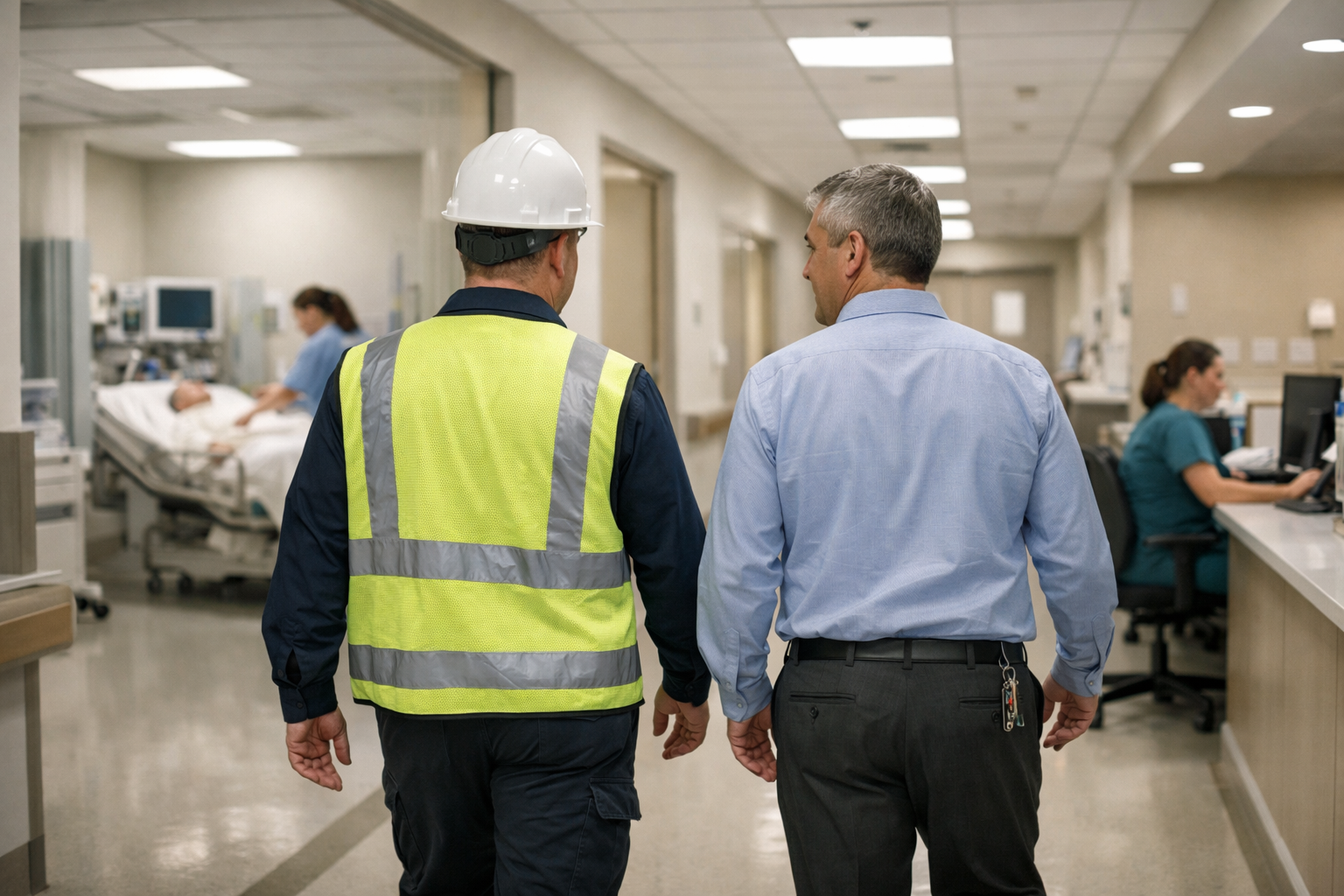
A safe workplace rarely happens by accident. It is built through repeatable processes, clear expectations, and practical safeguards that people can follow even on busy days. In healthcare, those expectations carry extra weight. Patients may be medically vulnerable, facilities operate around the clock, and contractors often work alongside clinical teams. Safety and compliance must function in the real world, not just on paper.
That is where an Environmental, Health, and Safety specialist comes in. EHS specialists help organizations reduce risk, prevent incidents, improve documentation, and maintain readiness for inspections. Their work can be quiet, but the results are easy to see. Fewer injuries. Cleaner processes. Better training. Stronger confidence during audits.
If you are here to answer the question “what is an EHS specialist?”, you are in the right place. We will explain the role in plain language, then show how the work changes in healthcare environments where safety, documentation, and regulatory readiness carry higher stakes. Healthcare teams that need support in complex settings can also explore our EHS specialists in healthcare services.
What Is an EHS Specialist?
An EHS specialist is an Environmental, Health, and Safety professional who helps an organization reduce workplace risk and meet safety and environmental requirements. They identify hazards, improve procedures, support training, and maintain documentation that helps teams operate safely and stay prepared for inspections.
EHS stands for Environmental, Health, and Safety. The role typically includes:
- Monitoring workplace conditions and identifying hazards
- Supporting compliance through programs, training, and documentation
- Reducing incidents by improving processes and accountability
In healthcare, EHS also supports controlled environments that protect patients, staff, and visitors. For a broader overview of the EHS framework, see our guide on what is EHS in healthcare.
Each part of EHS plays a distinct role in protecting people and operations.
- Environmental work often involves hazardous materials management, waste handling, spill prevention, and other responsibilities that reduce the risk of environmental contamination.
- Health work focuses on exposures and conditions that can affect people over time, including chemical exposure, indoor air quality concerns, ergonomic strain, and biological hazards.
- Safety work focuses on preventing injuries and incidents, from slips and falls to equipment risks and unsafe work practices.
In regulated industries, the EHS specialist job role often expands beyond standard workplace safety. Healthcare is a clear example. Hospitals and clinics are complex environments with higher exposure risks, strict documentation expectations, and frequent inspections. EHS specialists in these settings often collaborate with facilities teams, infection prevention, environmental services, and construction partners to keep safety programs practical and enforceable.
What Does an EHS Specialist Do?
An EHS specialist helps an organization prevent incidents and reduce risk by identifying hazards, improving safety procedures, supporting regulatory compliance, and delivering training. They also maintain the documentation needed for inspections, audits, and internal accountability.
Day to day, an EHS specialist often:
- Evaluates work areas for hazards and recommends corrective actions
- Reviews incidents and near misses to prevent repeat problems
- Develops or updates safety programs, checklists, and written procedures
- Coordinates training for employees and contractors
- Supports compliance efforts through records, reports, and inspection readiness
The work protects more than people. Strong EHS programs also reduce property damage, limit operational downtime, and help organizations manage environmental responsibilities such as hazardous materials handling and waste practices.
EHS specialist duties vary by industry and setting. A specialist in a hospital may focus heavily on controlled environments, infection prevention support, and contractor coordination in occupied spaces. A specialist in construction may prioritize job site hazards, exposure controls, and redevelopment risks. A specialist in manufacturing may focus on machine safety, chemical exposure, and process-driven controls. The goal remains consistent across all environments: reduce risk through practical systems that hold up under real-world conditions.
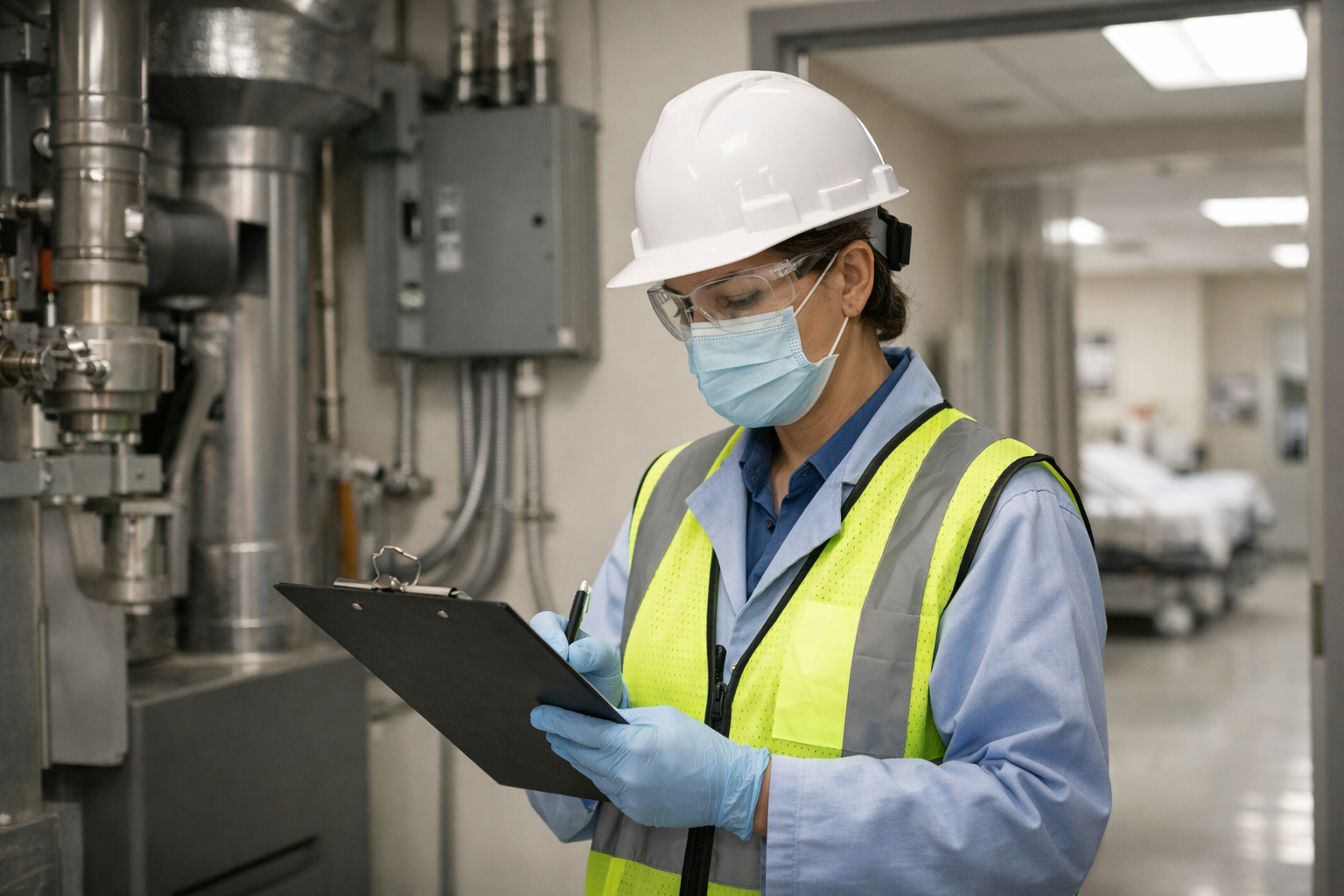
3 Key EHS Specialist Duties and Responsibilities
Most EHS roles can be grouped into three core responsibilities: compliance and inspection readiness, environmental and risk management, and training that turns policies into daily habits. Strong EHS specialists also document what they do and why it matters, since documentation is often what proves compliance and supports continuous improvement.
- Health and safety compliance: Build and maintain programs that meet requirements, reduce incidents, and support inspection readiness through clear records and corrective actions.
- Environmental protection and risk management: Manage hazards that can affect the environment, including materials handling, waste practices, and exposure controls that prevent contamination.
- Training and employee safety programs: Deliver training and reinforce safe work practices so employees and contractors understand risks and follow consistent procedures.
Health and Safety Compliance
Health and safety compliance is one of the most visible parts of the EHS specialist job role. It includes monitoring workplace practices, tracking corrective actions, and ensuring required programs are current and used.
In practical terms, this often involves:
- Reviewing and updating written safety programs so they match actual operations
- Supporting compliance with OSHA requirements and other applicable standards
- Preparing teams for inspections by organizing records, training logs, and corrective action documentation
- Coordinating with leadership so safety expectations are consistent across departments
- Supporting infection control and patient safety practices in healthcare environments, especially when construction or maintenance work occurs in occupied areas
Compliance work is rarely a single event. It is an ongoing discipline that reduces risk and helps organizations respond calmly when an inspection or survey occurs.
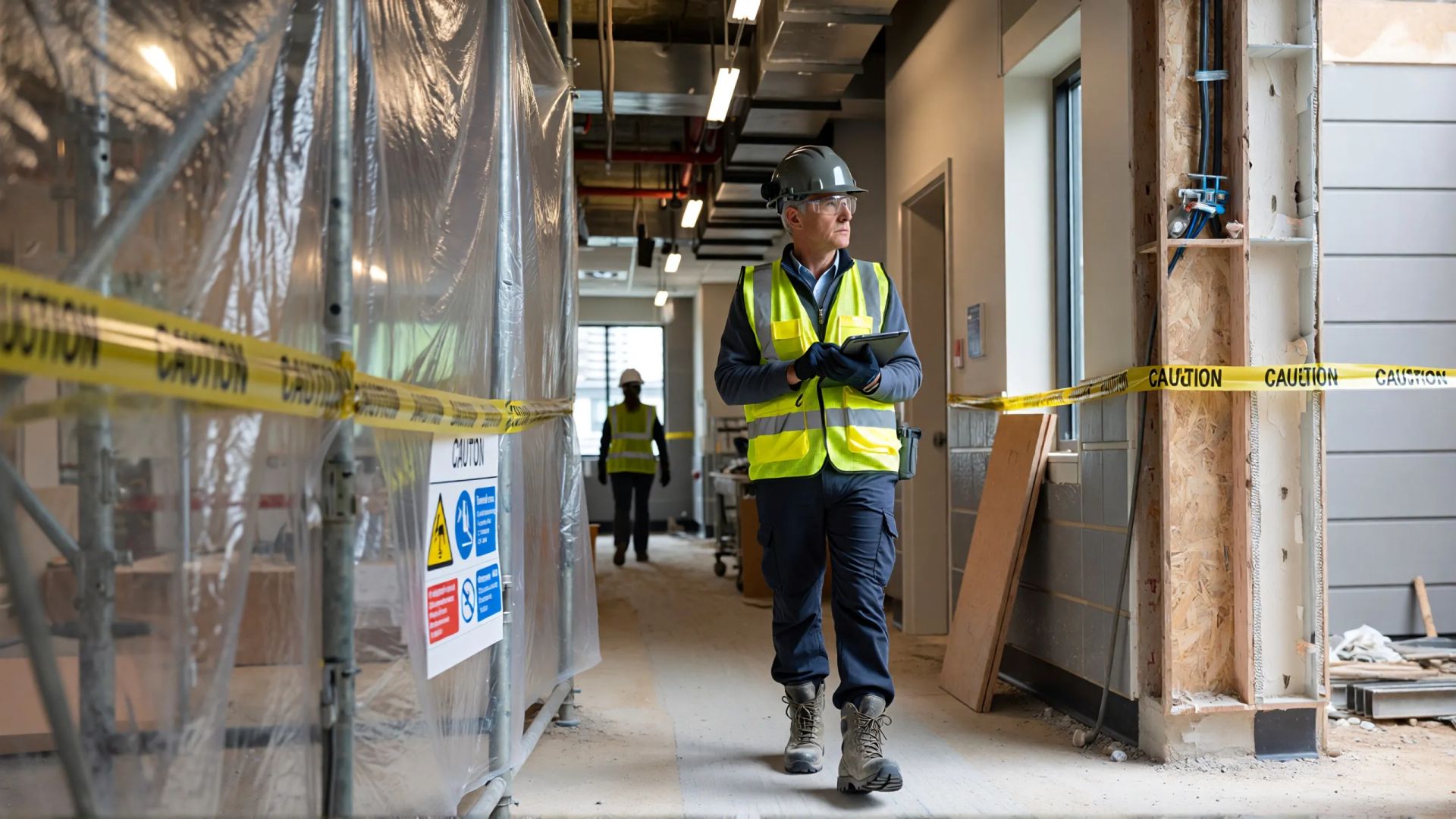
Environmental Protection and Risk Management
Environmental responsibilities are often integrated into the same risk mindset. EHS specialists help organizations manage materials and processes that could harm people, property, or the environment if handled incorrectly.
Common responsibilities include:
- Managing hazardous materials and supporting safe storage and handling practices
- Coordinating waste disposal processes, including regulated waste streams under EPA hazardous waste requirements
- Supporting spill prevention and response planning
- Identifying exposure risks such as indoor air quality concerns, chemical use, or renovation-related hazards
- Reducing the chance of contamination events that can trigger shutdowns, cleanup costs, or regulatory action
In healthcare and redevelopment projects, this work may also involve coordinating around sensitive areas, occupied spaces, and work that can release dust, odors, or other hazards if not controlled properly.
Training and Employee Safety Programs
Training is where an EHS program either becomes real or stays theoretical. EHS specialists design and deliver training that helps people recognize hazards, follow procedures, and make safe decisions under pressure.
This often includes:
- Conducting safety training for employees, supervisors, and contractors
- Teaching hazard awareness and safe work practices for specific tasks and environments
- Reinforcing reporting expectations so teams document incidents and near misses early
- Supporting a safety culture where accountability is clear and concerns are addressed quickly
In healthcare settings, training frequently extends to contractors and vendors working in clinical environments, where safety expectations must remain high even when schedules are tight.

Why EHS Specialists Are Critical in Healthcare Settings
EHS specialists are critical in healthcare because hospitals and clinics face higher exposure risks, stricter documentation expectations, and more frequent inspections than many other workplaces. Their work helps protect patients, staff, visitors, and contractors while keeping the facility prepared for surveys, audits, and regulatory reviews.
Healthcare also carries a higher injury burden than many industries. According to the Bureau of Labor Statistics, employers in health care and social assistance reported 562,500 injuries and illnesses in 2023, with an incidence rate of 3.6 cases per 100 full-time workers, compared to 2.4 per 100 across private industry overall. CDC notes that manually handling and lifting patients can cause injuries and work-related musculoskeletal disorders, which are common among healthcare workers.
Healthcare presents safety challenges that do not show up in most office or light industrial settings. Patient care continues while maintenance occurs. Construction projects happen in occupied buildings. High traffic areas include vulnerable populations. Many hazards are invisible until something goes wrong, such as airborne contaminants, improper waste handling, or inconsistent contractor practices.
A strong healthcare EHS program creates structure around these realities. It clarifies expectations across departments, reinforces safe work practices, and provides documentation that proves the organization is managing risk responsibly. Those efforts support both daily operations and higher-level goals such as accreditation readiness and reduced incident rates.
Protecting Patients, Staff, and Visitors
Healthcare environments concentrate a wide range of hazards in a single building. Biological exposure risks, sharps, medical gases, chemicals, cleaning agents, and physical hazards can all exist within the same workflow. EHS specialists help identify where exposure is most likely, then strengthen controls that reduce the chance of harm.
This protection often includes:
- Reducing exposure to biological, chemical, and physical hazards through practical controls
- Supporting safe patient care environments by coordinating around occupied areas and sensitive populations
- Strengthening contractor expectations so work practices do not introduce unnecessary risk
- Reducing workplace injuries and illnesses through targeted training and corrective actions
When safety systems are working, the facility feels calmer. Teams know what to do, leaders know what to enforce, and risk is managed before it becomes an incident.
Meeting Healthcare Regulations and Standards
Healthcare compliance is layered. Facilities must meet workplace safety requirements, manage hazardous materials and waste, and maintain documentation that holds up under inspection. Accreditation and regulatory readiness depend on both performance and proof.
EHS specialists support this work by:
- Maintaining programs and records that support compliance with OSHA requirements and state agencies
- Supporting readiness for surveys and inspections by keeping documentation organized, current, and accessible
- Managing healthcare-specific hazards such as medical waste, chemical disinfectants, and exposure risks tied to clinical operations
- Reducing the risk of fines, operational disruption, or reputational harm by addressing issues early
Most organizations do not struggle because they lack good intentions. They struggle because safety programs drift from real operations. EHS specialists help close that gap by translating requirements into systems that work in the day-to-day reality of healthcare.
EHS Specialist Job Role Across Different Industries
The EHS specialist job role adapts to each work environment, but the purpose stays the same: reduce risk through hazard identification, effective controls, consistent training, and clear documentation.
Healthcare EHS work often centers on occupied spaces, vulnerable populations, and high documentation expectations. Construction EHS work focuses on changing job site conditions, multiple contractors, and exposure controls. Manufacturing EHS work emphasizes consistent procedures, machine safety, and repeatable controls that prevent incidents and downtime.
Across all settings, strong EHS work is practical. The best programs match how people actually work, then make safer choices easier to follow and easier to verify.
EHS in Construction and Property Redevelopment
Construction and redevelopment introduce fast changing conditions and risks that can affect workers and building occupants. EHS specialists support safer projects by coordinating hazards, exposure controls, and compliance documentation.
Common priorities include:
- Managing job site risks such as falls, equipment hazards, and temporary conditions
- Coordinating safe work practices across contractors and phases
- Addressing asbestos, lead, mold, and indoor air quality concerns where applicable
- Supporting documentation that shows risks were assessed and controlled
Higgins also supports these needs through EHS for property transactions and redevelopment.
EHS in Manufacturing and Industrial Facilities
Industrial environments rely on repeatable processes, which makes strong EHS controls especially valuable. EHS specialists help reduce incidents by strengthening procedures, training, and preventive systems.
Common priorities include:
- Supporting machine safety and safe energy control practices
- Reducing chemical exposure risks through handling practices and training
- Addressing ergonomic strain through task design and work practices
- Investigating incidents and improving controls to prevent recurrence
Skills and Qualifications of an Effective EHS Specialist
An effective EHS specialist combines technical knowledge with practical leadership. The best specialists know how to spot risk, explain it clearly, and help teams adopt safer practices without slowing operations unnecessarily.
Key skills that show up across industries include:
- Hazard recognition and risk assessment: The ability to identify what could cause harm, then prioritize what to address first.
- Program development and documentation: Comfort building procedures, checklists, logs, and corrective action tracking that teams will actually use.
- Training and communication: The ability to teach clearly, coach respectfully, and adjust messaging for staff, leadership, and contractors.
- Investigation and problem solving: A calm approach to incidents and near misses, with a focus on root causes and prevention.
- Collaboration across departments: The ability to work with facilities, operations, HR, clinical teams, and vendors without creating friction.
Qualifications vary by setting, but most EHS specialists have training in safety, environmental science, industrial hygiene, public health, engineering, or a related field. Some roles prefer certifications. A few common examples include Certified Safety Professional (CSP), Certified Industrial Hygienist (CIH), and Certified Hazardous Materials Manager (CHMM). These are not required for every role, but they often signal advanced experience.
In-House EHS Specialist vs. EHS Consulting Services
The right fit depends on your risk profile, internal capacity, and how regulated your environment is.
Category | In House EHS Specialist | EHS Consulting Services |
Best for | Ongoing, day to day oversight | Specialized needs, projects, or extra capacity |
Coverage | Consistent presence on site | Targeted support based on scope and schedule |
Expertise depth | Broad knowledge of your facility and teams | Deep specialty expertise across hazards and industries |
Speed to start | Slower (hiring, onboarding) | Faster (engagement-based) |
Cost structure | Fixed salary and benefits | Flexible spend tied to project or hours |
Program ownership | Internal accountability and continuity | External validation plus structured improvements |
Compliance readiness | Strong for routine inspections when well-resourced | Strong for audits, gap assessments, and high-risk scenarios |
Training support | Ongoing employee training cadence | Specialized training and refreshers as needed |
When it is a strong fit | Stable operations with consistent hazards | High regulation, complex environments, or change-heavy periods |
Many organizations use both approaches. An internal EHS specialist can provide consistency, while consultants add capacity and specialized expertise for high-risk issues, inspections, complex projects, or program improvements.
How Higgins and Associates Support EHS Needs
At Higgins and Associates, we help organizations strengthen Environmental, Health, and Safety programs with practical consulting and training that supports safer workplaces and stronger compliance readiness. Our work spans safety regulations, industrial hygiene, and environmental compliance, with recommendations that are designed to work in real operating conditions, not just in theory.
In healthcare settings, our training focuses on healthcare construction and infection control during construction activities. We offer courses online and in person to support infection preventionists, facility managers, safety coordinators, and project teams who need clear, consistent practices in active care environments.
Beyond healthcare, we support environmental and risk considerations tied to property transactions and redevelopment, along with industrial hygiene and safety consulting services. These engagements often help organizations evaluate conditions, reduce exposure concerns, and strengthen documentation and decision-making when risks need to be clearly understood.
Final Thoughts
EHS specialists play a practical role in keeping workplaces safer, more consistent, and more defensible under scrutiny. They reduce risk by identifying hazards early, strengthening procedures, and building the documentation and training systems that help organizations stay prepared for inspections and audits.
The need becomes even clearer in healthcare settings, where facilities operate continuously and risks can affect patients, staff, and visitors at the same time. The same core EHS principles also apply across construction, redevelopment, and industrial environments. Hazards change, but the goal stays the same: protect people, protect operations, and maintain compliance through systems that hold up in the real world.
If your team is building a new EHS program, preparing for an inspection, or navigating construction activity in an active facility, experienced support can make the process faster and more reliable. If you would like to talk through a specific facility, project, or compliance concern, contact our EHS specialists to discuss next steps.