What Is ICRA in Healthcare and How It Protects Patients and Staff During Renovations
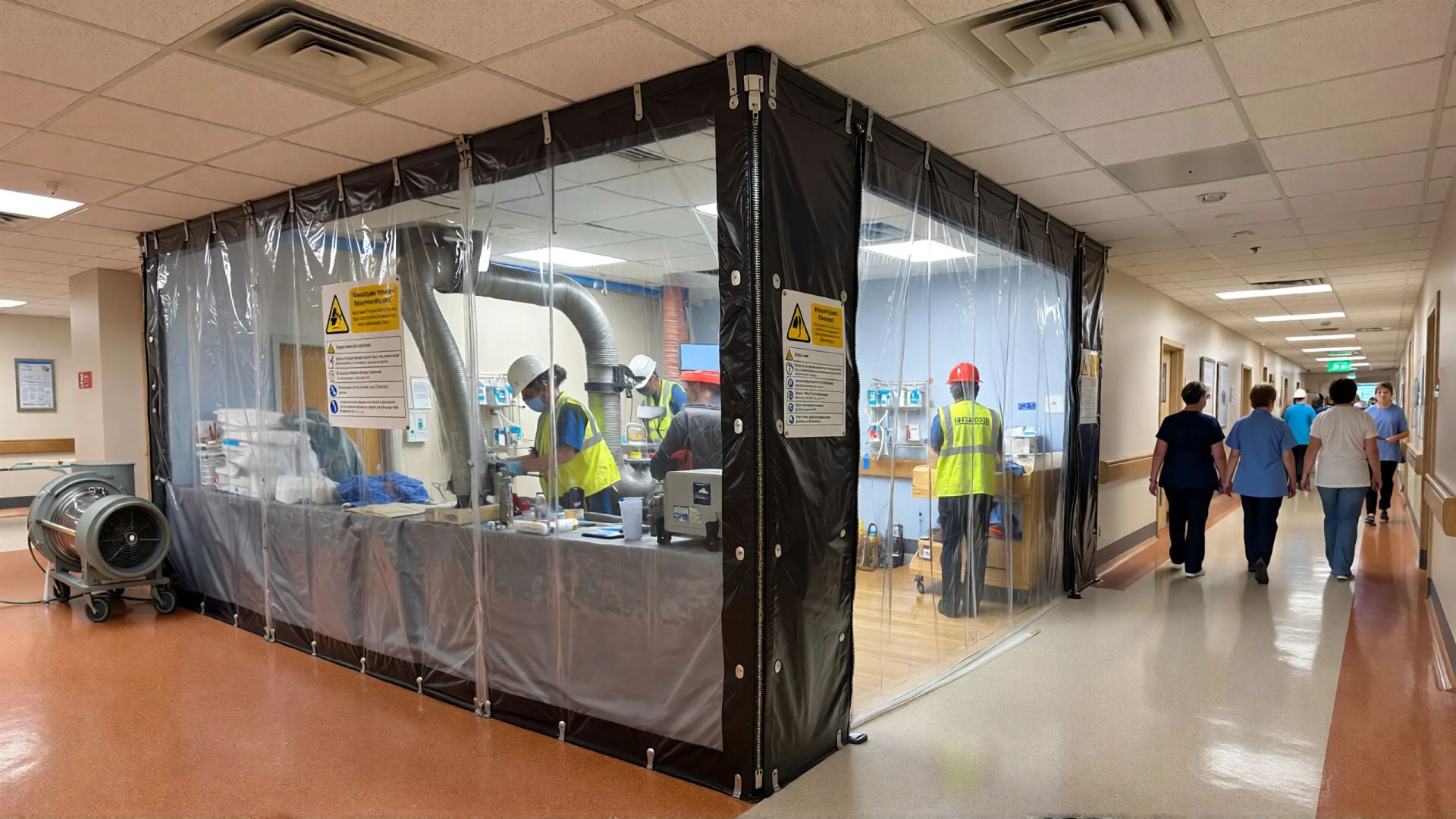
Hospitals are living environments. Departments expand. Equipment is upgraded. Patient rooms are renovated. Infrastructure is modernized to support new standards of care. Construction inside healthcare facilities is not unusual. It is part of keeping care environments current and functional.
What many people do not realize is that even routine renovation work can introduce infection risks if it is not carefully managed.
According to the Centers for Disease Control and Prevention (CDC), on any given day, about 1 in 31 hospital patients has at least one healthcare-associated infection. In environments where patients may already be medically fragile, even small environmental disruptions matter. Construction activities can disturb dust, alter airflow patterns, and release contaminants that would otherwise remain contained behind walls or above ceilings.
This is why ICRA in healthcare is not optional.
An Infection Control Risk Assessment, or ICRA, is a structured planning process used to identify potential infection hazards before construction begins and to implement controls that protect patients, staff, and visitors throughout the project. When properly applied, ICRA allows necessary renovations to move forward while maintaining a safe care environment.
What Is ICRA in Healthcare?
The term ICRA stands for Infection Control Risk Assessment.
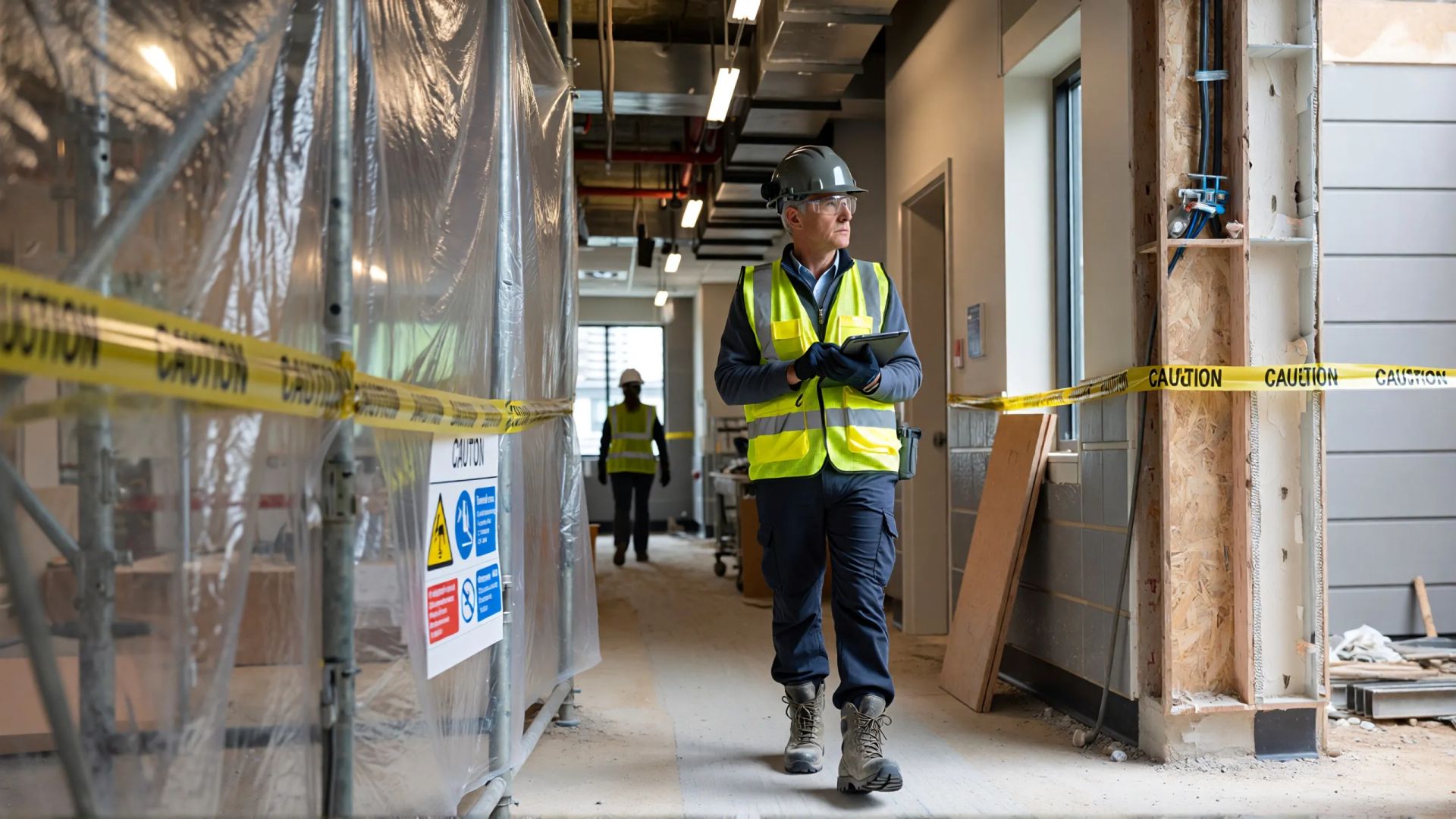
When people search for “what is ICRA healthcare” or look for the icra healthcare meaning, they are typically asking for a clear definition. In simple terms, ICRA in healthcare is a formal risk evaluation process used before and during construction, renovation, or maintenance activities in hospitals and other medical facilities.
It is important not to confuse ICRA with ICHRA, which refers to an insurance reimbursement arrangement. In healthcare construction, ICRA always refers to Infection Control Risk Assessment.
The ICRA healthcare definition can be summarized this way:
ICRA is a planning tool that helps healthcare facilities identify potential infection hazards related to construction activities and determine the appropriate control measures needed to reduce those risks.
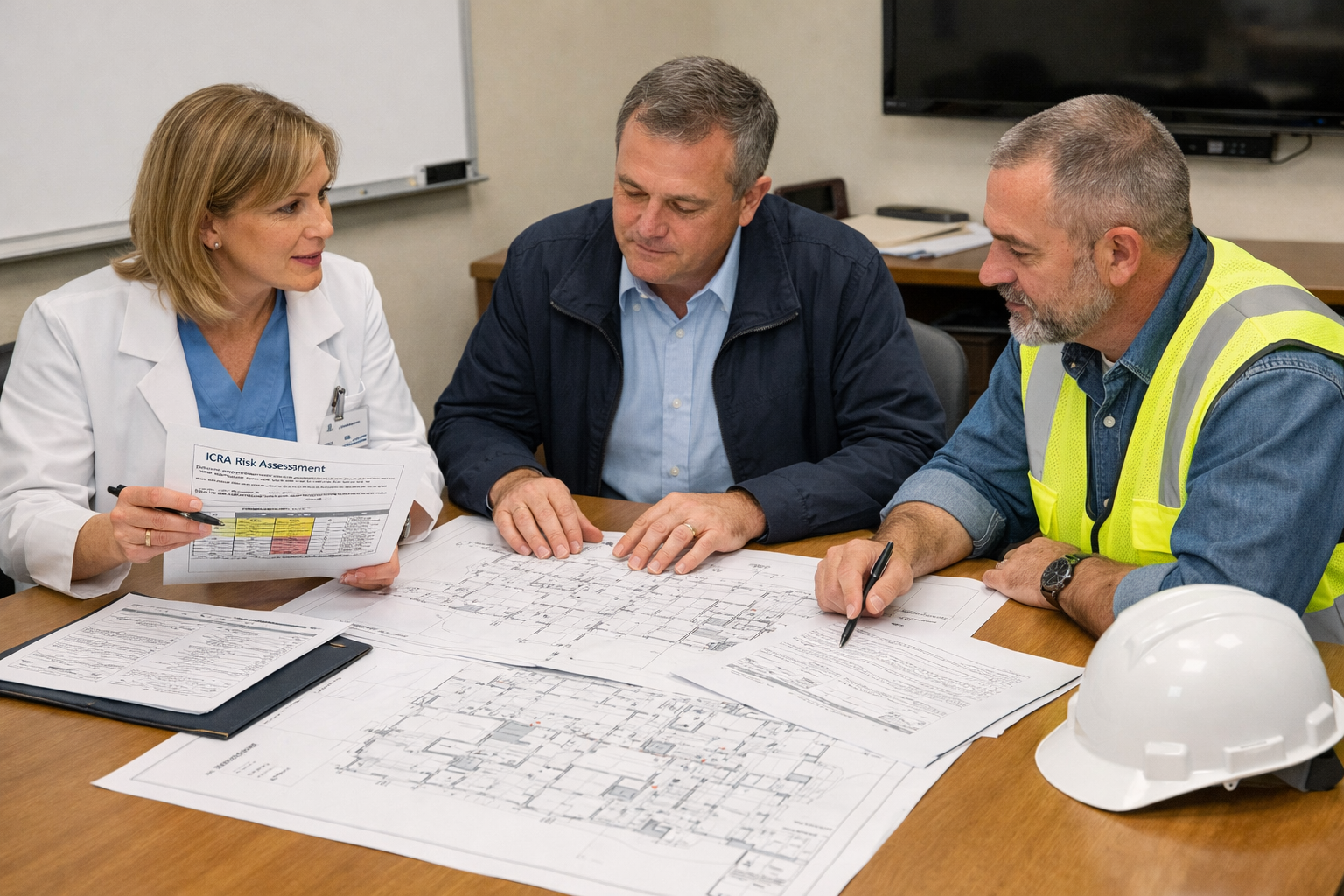
It is not simply paperwork. It is a coordinated effort between facility leadership, infection prevention professionals, safety teams, and construction personnel. The goal is to anticipate problems before they happen and to design protective measures into the project from the start.
Why ICRA Is Critical During Healthcare Renovations
Construction work changes the physical environment. Walls are opened. Ceilings are accessed. Floors are cut. Mechanical systems are adjusted. These activities generate dust and can alter airflow patterns throughout a building.
According to guidance from the CDC, construction and renovation activities in healthcare facilities can increase airborne fungal spore levels. These spores, including organisms such as Aspergillus, can pose serious risks to immunocompromised patients.
In many hospital areas, patients may be recovering from surgery, undergoing chemotherapy, or receiving intensive care. Their immune systems may not be able to tolerate exposure that would be harmless to healthy individuals. Standard housekeeping practices are not sufficient when construction is underway. Proactive containment and environmental controls are required.
ICRA provides the framework for those controls.
Without a structured infection control risk assessment, construction projects may unintentionally expose vulnerable populations to preventable hazards. ICRA ensures that infection prevention is considered at the same level as structural design, schedule, and budget.
How the ICRA Process Works in Healthcare Facilities
An Infection Control Risk Assessment is completed before construction begins. It is part of responsible project planning, not an afterthought.
The process typically involves collaboration between:
- Infection prevention professionals
- Facilities management
- Safety and compliance teams
- Construction planners and contractors
- Clinical leadership from affected departments
Together, this group evaluates the scope of the work and the environment where it will occur. The purpose is to match the level of construction activity with the level of patient risk and determine appropriate control measures.
While every facility may have its own documentation format, the core process generally follows three practical steps.
Step 1: Identifying the Type of Construction Activity
The first step is to define the nature of the work.
Minor activities such as painting, installing fixtures, or performing small repairs typically generate limited dust and disruption. Major demolition, new construction, or invasive mechanical work creates significantly more airborne particles and environmental disturbance.
The greater the disruption to walls, ceilings, or utilities, the greater the potential infection risk. Properly classifying the construction activity ensures that controls are proportional to the actual hazard.
Step 2: Identifying the Risk Level of the Area
Next, the team evaluates who is located near the construction zone.
Administrative offices and public corridors present lower clinical risk. Intensive care units, transplant wards, oncology units, and surgical suites present a much higher risk due to the vulnerability of the patient population.
The Infection Control Risk Assessment considers both the type of patients and the nature of the care provided in the adjacent area. This risk-based approach ensures that controls are tailored to the environment rather than applied uniformly across the facility.
Step 3: Selecting Required Infection Control Measures
Once construction type and patient risk level are defined, the appropriate control measures are selected.
These measures may include:
- Installation of temporary containment barriers
- Use of negative air pressure systems
- High-efficiency particulate air filtration
- Controlled traffic pathways
- Enhanced cleaning protocols
- Ongoing environmental monitoring
The focus is prevention. The goal is to stop dust, debris, and contaminated air from migrating into patient care areas.
ICRA does not rely on reactive cleanup. It establishes safeguards before work begins and maintains them throughout the project.
ICRA Classifications Explained (Class I–IV)
After identifying the type of construction activity and the risk level of the surrounding area, the next step in the Infection Control Risk Assessment process is assigning a classification level.
ICRA classifications define how strict the infection control measures must be during the project. The higher the potential risk to patients, the more comprehensive the containment and monitoring requirements.
Many healthcare facilities use a Class I through Class IV system. Some frameworks, including more recent toolkits, may reference additional precaution levels for very high-risk scenarios. Regardless of the numbering structure, the purpose remains the same: match the level of protection to the level of risk.
Overview of ICRA Class I and II
Class I and II precautions typically apply to minor activities that generate little dust or disruption.
Examples may include:
- Inspection and non-invasive activities
- Minor repairs
- Limited surface work
Controls at these levels usually focus on basic dust containment and housekeeping measures. This may involve simple barriers, protective coverings, and routine cleaning practices. The goal is to prevent visible debris from spreading into adjacent areas.
Even at lower classifications, infection control is still intentional. The assessment ensures that small projects do not unintentionally create unnecessary exposure.
Overview of ICRA Class III and IV
Class III and IV precautions apply to more invasive construction work.
This may include:
- Demolition
- Major renovation
- New construction within or adjacent to patient care areas
- Work that disrupts walls, ceilings, or ventilation systems
At these higher classifications, controls become more structured and comprehensive. Facilities may require:
- Full containment barriers sealed from floor to deck
- Negative air pressure systems
- High-efficiency particulate air filtration
- Designated entry and exit pathways
- Enhanced cleaning protocols
- Ongoing pressure monitoring
These measures are designed to prevent dust and airborne contaminants from migrating into clinical areas. The stricter the classification, the more rigorous the containment expectations.
ICRA classifications ensure that infection control measures are not arbitrary. They are based on risk, not convenience.
Regulatory Guidelines and Standards Related to ICRA
ICRA is not an isolated internal policy. It aligns with nationally recognized healthcare safety guidance.
The Centers for Disease Control and Prevention recommends that healthcare facilities conduct an infection control risk assessment before construction, renovation, or maintenance activities begin. The purpose is to evaluate how the work may increase exposure to airborne contaminants and to implement controls that reduce risk to vulnerable patients.
The Joint Commission also expects healthcare organizations to perform a preconstruction risk assessment that addresses infection control, air quality, and other environmental hazards before starting work.
In addition, the American Society for Health Care Engineering provides structured tools, including the ICRA matrix and permit format, to guide facilities in applying a consistent and documented approach.
Together, these organizations reinforce a clear principle: infection prevention must be integrated into project planning from the earliest stages. Compliance is not only about meeting accreditation standards. It is about reducing preventable risk during construction activities.
When Should a Healthcare Facility Conduct an ICRA?
An Infection Control Risk Assessment should be completed before construction begins.
The assessment is part of responsible project planning. It should occur during the design or preconstruction phase, before demolition, renovation, or invasive maintenance work starts.
If the scope of work changes during the project, the ICRA should be reviewed and updated. For example:
- Expansion of the construction footprint
- Changes in patient occupancy near the project
- Modifications to ventilation systems
- Extended project timelines
Healthcare environments are dynamic. The assessment must reflect current conditions. Treating ICRA as a one-time checklist can lead to gaps in protection.
The most effective facilities approach ICRA with a prevention mindset. Instead of reacting to contamination events, they anticipate potential risks and implement controls early.
Who Is Responsible for ICRA in Healthcare Projects?
ICRA is a shared responsibility.
Healthcare facility leadership is ultimately responsible for ensuring that infection risks are assessed and managed. However, successful implementation requires collaboration among multiple stakeholders.
Typically involved are:
- Infection prevention professionals
- Facilities management teams
- Safety and compliance officers
- Construction managers and contractors
- Clinical department representatives
Infection prevention specialists often guide the technical aspects of the assessment. Contractors are responsible for implementing the specified controls. Facilities teams monitor compliance and ensure documentation is maintained.
At Higgins and Associates, we support healthcare clients by providing industrial hygiene expertise, environmental monitoring, and practical guidance on ICRA in healthcare implementation. We help teams interpret risk classifications, design appropriate containment strategies, and verify that controls are functioning as intended.
Clear roles and communication prevent misunderstandings and reduce the likelihood of containment failures.
Consequences of Not Following ICRA in Healthcare
When Infection Control Risk Assessments are not properly conducted or enforced, the consequences can extend far beyond construction delays.
The most serious risk is patient harm. Construction-related dust and airflow disruption can introduce airborne contaminants into patient care areas. For immunocompromised patients, exposure to certain fungal spores or environmental pathogens can lead to severe infections. Healthcare-associated infections already represent a significant patient safety concern nationwide. Introducing preventable environmental risk during construction adds unnecessary exposure.
There are also operational and regulatory implications.
Failure to follow ICRA protocols can result in:
- Project shutdowns
- Required corrective action plans
- Increased scrutiny during accreditation surveys
- Delays that impact patient services
- Reputational damage within the community
Containment failures often require additional cleaning, environmental testing, and remediation before work can resume. These disruptions affect timelines and budgets.
ICRA is designed to prevent these outcomes. When the assessment is completed thoroughly and controls are implemented correctly, facilities reduce both clinical and operational risk.
How Higgins and Associates Support ICRA in Healthcare
At Higgins and Associates, we work alongside healthcare facilities, construction teams, and compliance leaders to strengthen infection control planning during renovation and construction projects.
We understand that ICRA is not simply a document. It is a coordinated process that requires technical knowledge, environmental awareness, and practical field application.
Our team supports healthcare clients by:
- Assisting with infection control risk evaluations
- Providing industrial hygiene expertise during project planning
- Advising on containment design and environmental monitoring
- Supporting compliance documentation and verification
- Delivering education and training to align teams around best practices
Healthcare construction requires collaboration. We help bridge the gap between infection prevention, facilities management, and construction teams so that containment measures are clearly defined and properly implemented.
For teams seeking structured guidance and consistent implementation across departments and contractors, our ICRA in healthcare training can help align expectations and strengthen compliance practices.
For a more construction-focused explanation of how these infection control principles apply directly on active job sites, see our detailed guide on what is ICRA in construction.
Our focus remains straightforward: protect patients, support staff, and help projects move forward safely.
Conclusion
Healthcare facilities cannot pause improvement projects simply because patients are present. Renovations, expansions, and upgrades are necessary to maintain quality care environments.
At the same time, patient safety must remain the priority.
ICRA in healthcare provides a structured method to evaluate infection risks before construction begins and to implement practical safeguards that protect patients, staff, and visitors throughout the project. By assessing construction activity, identifying patient vulnerability, and selecting appropriate containment measures, facilities reduce preventable exposure.
When infection control planning is integrated early and monitored consistently, healthcare organizations can modernize their environments without compromising safety.
Thoughtful planning supports safer outcomes.
Frequently Asked Questions (FAQs)
How often should an ICRA be reviewed or updated during a healthcare renovation project?
An Infection Control Risk Assessment in healthcare should be completed before construction begins and reviewed whenever project conditions change. If the scope expands, patient populations shift, ventilation systems are modified, or timelines are extended, the ICRA should be updated to ensure containment measures remain appropriate and effective.
Is ICRA required for small maintenance or short-term repair work in healthcare facilities?
Yes. Even minor activities may require an ICRA in healthcare settings. Small repairs or short-term maintenance tasks must still be evaluated to determine the level of dust generation and proximity to vulnerable patients. Lower-risk projects may require basic precautions, but the assessment process should still occur.
Can ICRA requirements differ between hospitals, clinics, and outpatient care centers?
Yes. ICRA healthcare requirements are risk-based and depend on the type of patients and services provided. High-acuity hospital units such as intensive care or oncology require stricter precautions than low-risk administrative or outpatient areas. The Infection Control Risk Assessment process accounts for these differences.
What documentation is typically required to prove ICRA compliance during inspections?
Healthcare facilities typically maintain a completed ICRA form or matrix, documentation of assigned precaution classifications, containment plans, pressure monitoring logs when required, and records showing that specified controls were implemented. Proper documentation demonstrates that infection risks were evaluated and managed according to established standards.
How does ICRA impact project timelines and construction costs in healthcare settings?
ICRA in healthcare may affect project sequencing, containment installation time, and environmental monitoring procedures. However, integrating infection control measures during planning often prevents costly delays, remediation, or regulatory issues later. Proactive ICRA planning generally supports more predictable timelines and safer project execution.
If you still have questions about ICRA in healthcare or need guidance in planning an upcoming renovation, our team is here to help. Visit our contact page to connect with our experts and discuss your project.