What Is Industrial Hygiene? Workplace Health & Safety Guide
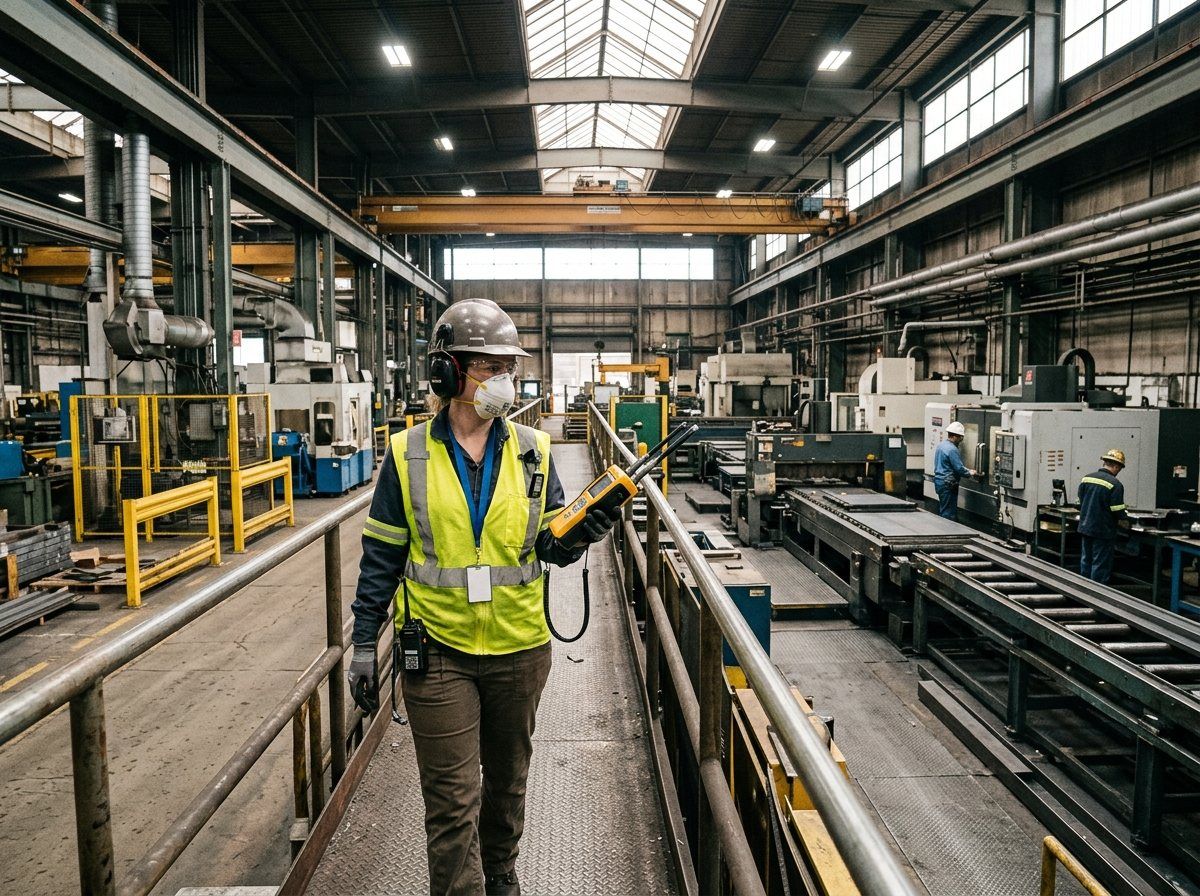
All workplaces rely on industrial hygiene but many don't fully understand it. It isn't simply about following rules or wearing protective equipment. What is industrial hygiene, in practical terms? It is the science of anticipating, recognizing, evaluating, and controlling workplace conditions that can cause worker injury or illness. An industrial hygienist works to prevent occupational illnesses and injuries, rather than responding after employees are already affected.
Understanding workplace industrial hygiene is essential for organizations in virtually every industry. This guide covers the core principles, hazard types, assessment methods, and control strategies that form the foundation of an effective industrial hygiene program.
Key Takeaways
- Industrial hygiene focuses on anticipating, recognizing, evaluating, and controlling workplace hazards before they cause illness or injury.
- The four core principles (anticipation, recognition, evaluation, and control) provide the systematic framework every hygiene program is built on.
- Workplace hazards fall into four main categories: chemical, physical, biological, and ergonomic. Most environments involve more than one.
- Engineering solutions and elimination are prioritized over administrative controls and PPE.
- Organizations that address hazards proactively reduce occupational illnesses and injuries, workers' compensation costs, and regulatory exposure.
- Our industrial hygiene consulting services address environmental and physical hazards that affect worker health over the long term.
What Is Industrial Hygiene?
Whereas general workplace safety addresses immediate physical hazards (falls, struck-by incidents, machinery), industrial hygiene focuses on long-term health protection. Chemical exposures that build up over years, noise levels that damage hearing gradually, biological hazards that cause illness without obvious immediate symptoms. These are the risks that an industrial hygiene program is designed to find and control, before they reach workers.
Why Industrial Hygiene Is Important
Employees exposed to uncontrolled hazards get sick, miss work, and file workers' compensation claims. The costs extend beyond direct medical expenses: lost productivity, replacement labor, training, and regulatory penalties all compound the impact of a single preventable illness.
But when health hazards are recognized and controlled before exposure thresholds are reached, occupational illnesses just don't develop. As a result, absenteeism falls. Workers' compensation claims decrease. Organizations that build proactive industrial hygiene programs into their operations find that the investment pays for itself through reduced incidents and avoided regulatory action.
The 4 Principles of Industrial Hygiene
| Principle | Purpose | Example |
|---|---|---|
| Anticipation | Identify potential hazards before exposure occurs | Reviewing processes before new equipment installation |
| Recognition | Detect existing workplace hazards | Identifying airborne contaminants during inspections |
| Evaluation | Measure employee exposure | Air sampling and noise monitoring |
| Control | Reduce or eliminate hazards | Ventilation systems, PPE, engineering controls |
These four principles form the foundation of every industrial hygiene program. They describe a systematic progression: identify hazards before anyone is exposed to them, detect those that workers are already exposed to, measure that exposure, and put controls in place to reduce it to acceptable levels.
Common Workplace Hazards that Industrial Hygiene Addresses
| Hazard Type | Examples | Potential Health Effects |
|---|---|---|
| Chemical | Solvents, fumes, dust, vapors | Respiratory illness, skin irritation |
| Physical | Noise, vibration, radiation, heat | Hearing loss, heat stress |
| Biological | Mold, bacteria, viruses | Infections, allergic reactions |
| Ergonomic | Repetitive motion, poor workstation design | Musculoskeletal disorders |
Most workplaces contain more than one hazard category. A construction site may involve chemical, physical, and ergonomic hazards within the same crew and shift. A healthcare facility deals with biological hazards, chemical exposures, and patient-handling ergonomic risks.
Hazard severity depends on exposure duration, concentration, and work practices, not just the presence or absence of a hazard. An industrial hygiene assessment doesn't just identify what hazards exist; it measures how much exposure is occurring and whether that exposure exceeds the applicable exposure limits.
How Industrial Hygiene Assessments Are Conducted
Workplace Hazard Assessments
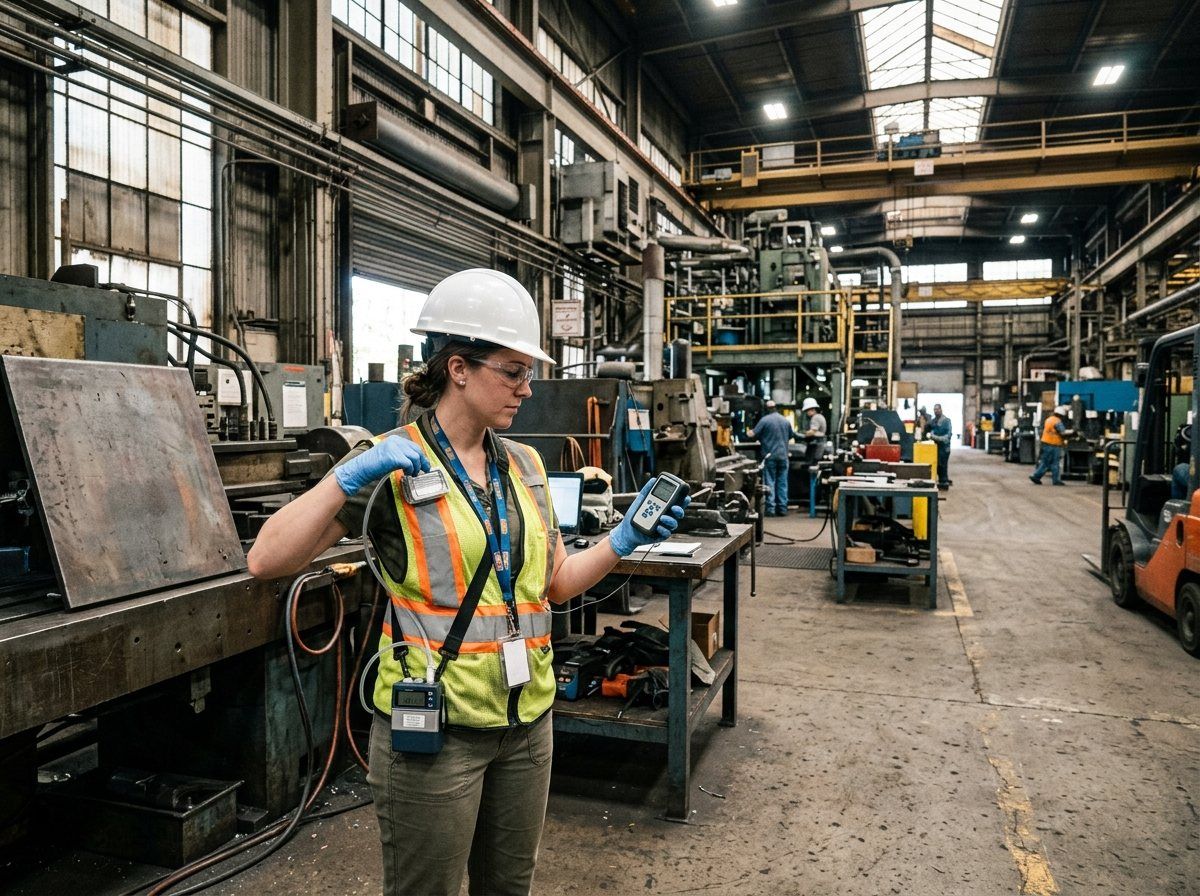
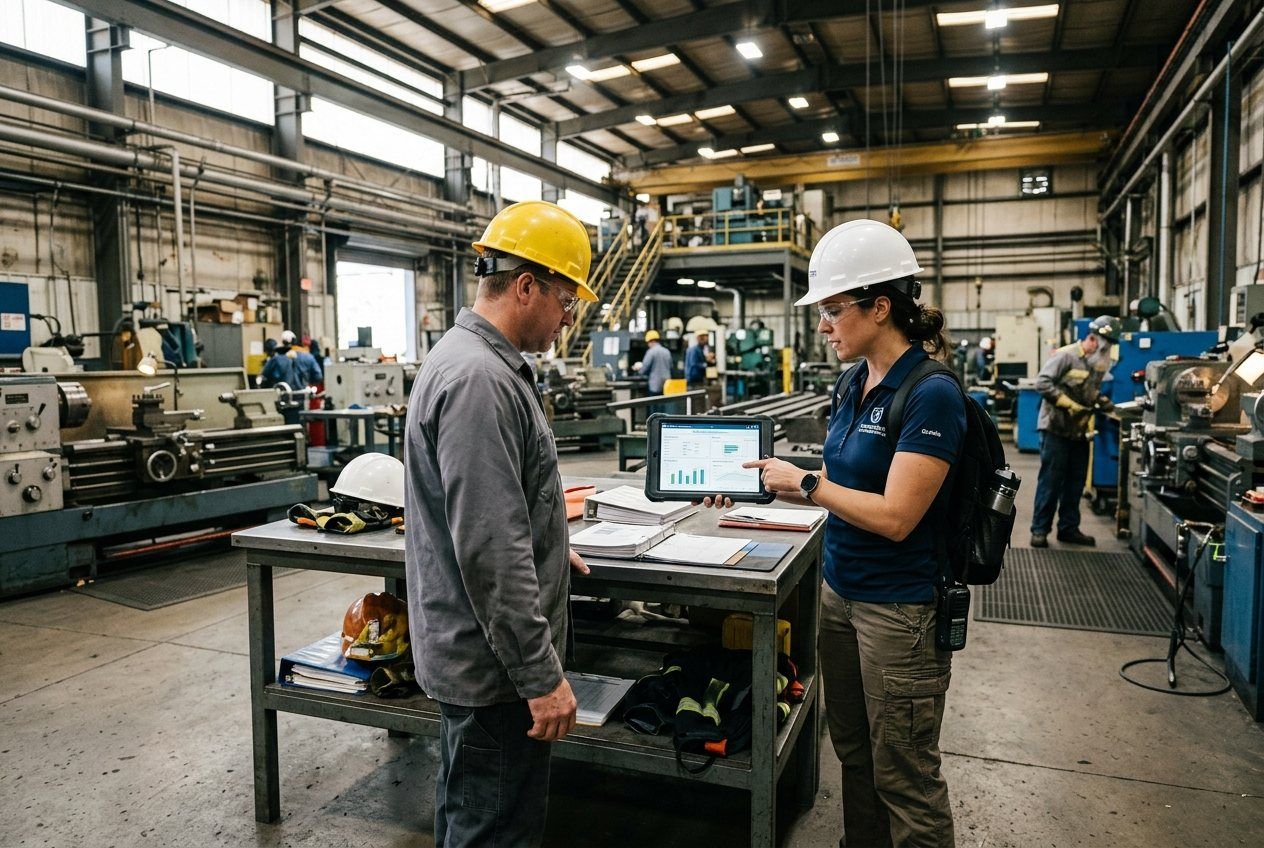
A workplace hazard assessment begins with a facility walkthrough: observing work processes, reviewing materials and equipment used, and identifying conditions that could lead to exposure. Process reviews examine how specific tasks are performed and where exposure opportunities exist. Employee interviews capture information about tasks, durations, and conditions that may not be visible during a single site visit.
The assessment prioritizes the highest-risk exposures: those involving the most hazardous substances, the longest durations, or the most workers affected. This triage step ensures that control resources are directed where they will have the greatest impact.
Exposure Monitoring
Air sampling measures airborne concentrations of chemicals, dust, and other contaminants. Noise dosimetry documents sound levels over a full work shift. Surface sampling identifies contamination on equipment and work surfaces. Heat stress monitoring is used in environments where high temperature and physical demands combine to create health risk.
Monitoring data serves two functions: it establishes whether current control measures are working, and it provides the documentation required for regulatory compliance. When sampling results show exposures above applicable permissible exposure limits, corrective action is needed. When results show exposures within limits, the data confirms the effectiveness of existing controls and creates a defensible record of due diligence.
Controlling Workplace Hazards Using the Hierarchy of Controls
| Control Method | Effectiveness | Example |
|---|---|---|
| Elimination | Highest | Remove hazardous process |
| Substitution | Very High | Replace hazardous chemical |
| Engineering Controls | High | Local exhaust ventilation |
| Administrative Controls | Moderate | Employee rotation, procedures |
| Personal Protective Equipment (PPE) | Last Line of Defense | Respirators, gloves, hearing protection |
The hierarchy of controls provides a prioritized framework for hazard reduction. On it, elimination and substitution are at the top because they're the most effective approaches. After all, it's better to remove a hazard altogether than to keep it and try to cope.
When a hazard can't be eliminated or substituted, engineering controls are the next best option. Ventilation systems and enclosures work continuously without requiring anyone to use them correctly, which makes them more reliable than administrative controls or PPE.
Administrative controls and personal protective equipment (PPE) are at the bottom of the hierarchy because they're subject to human error. Rotating workers to limit exposure time or requiring respirators in certain areas both work, but only when workers and supervisors follow the procedures just right.
Industries That Benefit Most from Industrial Hygiene
| Industry | Common Hazards | Typical Industrial Hygiene Focus |
|---|---|---|
| Manufacturing | Dust, chemicals, noise | Air monitoring, exposure controls |
| Construction | Silica, asbestos, noise | Respiratory protection, sampling |
| Healthcare | Biological hazards | Infection prevention |
| Oil & Gas | Chemical exposure | Air quality monitoring |
| Warehousing & Logistics | Ergonomics, diesel exhaust | Ergonomic assessments |
| Laboratories | Hazardous chemicals | Ventilation and exposure monitoring |
The concept of industrial hygiene applies to virtually every work environment, not just heavy industry. The specific hazards differ by sector, but the underlying goal is the same: identifying, measuring, and controlling worker exposures.
Industrial Hygiene and OSHA Compliance
Industrial hygiene supports compliance with a range of OSHA standards; the hygiene program documentation (assessment records, monitoring results, corrective action plans) is what organizations point to when OSHA inspectors arrive or when incidents are investigated.
Documentation and monitoring records matter because OSHA compliance requires both action and evidence of action. The same monitoring data that demonstrates due diligence to regulators also helps organizations identify trends over time and verify that controls continue to perform as expected.
Compliance is the minimum standard—the floor, not the ceiling. Organizations with strong programs often work to exposure levels well below OSHA's permissible exposure limits because many regulatory thresholds don't fully reflect current scientific understanding of long-term health effects.
Common Mistakes Organizations Make
| Common Mistake | Potential Consequence | Better Practice |
|---|---|---|
| Reactive hazard management | Increased employee exposure | Routine assessments |
| Infrequent exposure monitoring | Monitoring shortfalls | Scheduled monitoring |
| Overreliance on PPE | Limited risk reduction | |
| Poor documentation | Regulatory issues | Maintain complete records |
| Lack of employee training | Unsafe work practices | Ongoing EHS education |
Most of the failures that appear in this table share a common cause: treating industrial hygiene as a one-time compliance requirement rather than an ongoing process. A single assessment conducted before an OSHA inspection and then filed away doesn't provide the continuous awareness needed to catch new hazards as processes change, equipment ages, or workforce composition shifts.
Organizations that build for continuous improvement are the ones that hold up under scrutiny and protect their workers for the long haul.
When Should You Hire an Industrial Hygiene Consultant?
Several situations typically warrant outside expertise: an OSHA inspection or citation, a facility expansion, or a process change that introduces new materials or equipment. Employee health complaints that suggest exposure should be taken seriously too.
Third-party consultants bring objectivity and specialized equipment that in-house safety staff usually don't have. For organizations entering a new sector, undergoing operational changes, or responding to regulatory pressure, an experienced industrial hygiene partner can identify what internal programs have missed.
Higgins and Associates offers industrial hygiene assessments, workplace monitoring, regulatory guidance, and employee training for organizations across a range of industries. Our work is grounded in field experience, not just regulatory frameworks, so we recognize hazards in real environments, not just on paper.
Building a Long-Term Industrial Hygiene Program
A long-term hygiene program requires four ongoing commitments: routine workplace assessments that keep pace with operational changes, scheduled exposure monitoring that provides current data on worker exposures, employee training that ensures workers understand the hazards they face and how to protect themselves, and a process for continuous, proactive improvement that treats each assessment as an opportunity to refine controls.
Integrating industrial hygiene into a broader EHS management system leads to better outcomes than treating it as an isolated compliance ritual. When the two work together, hazard identification, exposure control, and regulatory compliance can start making each other easier.
Conclusion
Industrial hygiene is an ongoing process, not a compliance checkbox. It's about anticipating hazards before they reach workers, evaluating exposures with real measurement data, and applying controls that address the source of a given problem. Organizations that do this consistently have fewer occupational illnesses and injuries, lower workers' compensation costs, and stronger regulatory standing than those that treat hazard management as a reactive task.
Higgins and Associates is available to help you assess your workplace hazards and build a program that protects your people and your organization. Contact us to discuss your situation and determine the right next step:
Industrial Hygiene and Safety Consulting
FAQs
What qualifications does an industrial hygienist typically have?
Most industrial hygienists hold a degree in industrial hygiene, environmental health, chemistry, or engineering. The primary credential is the Certified Industrial Hygienist (CIH), awarded by the American Board of Industrial Hygiene. Many also hold the Certified Safety Professional (CSP). Industrial hygienists come from diverse educational backgrounds with bachelor's or master's degrees in environmental health, engineering, or public health. Many schools even offer degrees directly in industrial hygiene.
How often should an industrial hygiene assessment be performed?
Frequency depends on how stable a workplace's conditions are. Initial assessments establish baseline data; reassessment is warranted when processes change, new materials are introduced, employees report health concerns, or regulatory standards are updated. Annual reviews are a common baseline, with more frequent targeted monitoring for high-risk operations.
Is industrial hygiene required for small businesses?
OSHA standards apply to just about all employers regardless of size. Small businesses have the same exposure limits, hazard communication requirements, and recordkeeping obligations as large organizations. OSHA's free on-site consultation program provides (primarily) small and medium businesses with confidential hazard assessment and compliance guidance without citation risk, making it a useful resource before a formal inspection.
What's the difference between occupational health and industrial hygiene?
Industrial hygiene happens in the workplace. Improving working conditions is an industrial hygiene activity. Occupational health is about the human, clinical side. Industrial hygienists quantify exposure; occupational health professionals assess its health effects on individual workers.
Can industrial hygiene assessments help reduce workers' compensation claims?
Yes. Workers' compensation claims related to occupational illness are largely preventable when hazards are controlled before cumulative exposure reaches harmful levels. Organizations with regular monitoring and effective controls see lower rates of hearing loss, respiratory illness, and musculoskeletal disorders. Proactive exposure assessment typically costs far less than even one significant occupational illness claim.