
What Is a Phase 1 Environmental Site Assessment (and When You Need One)?
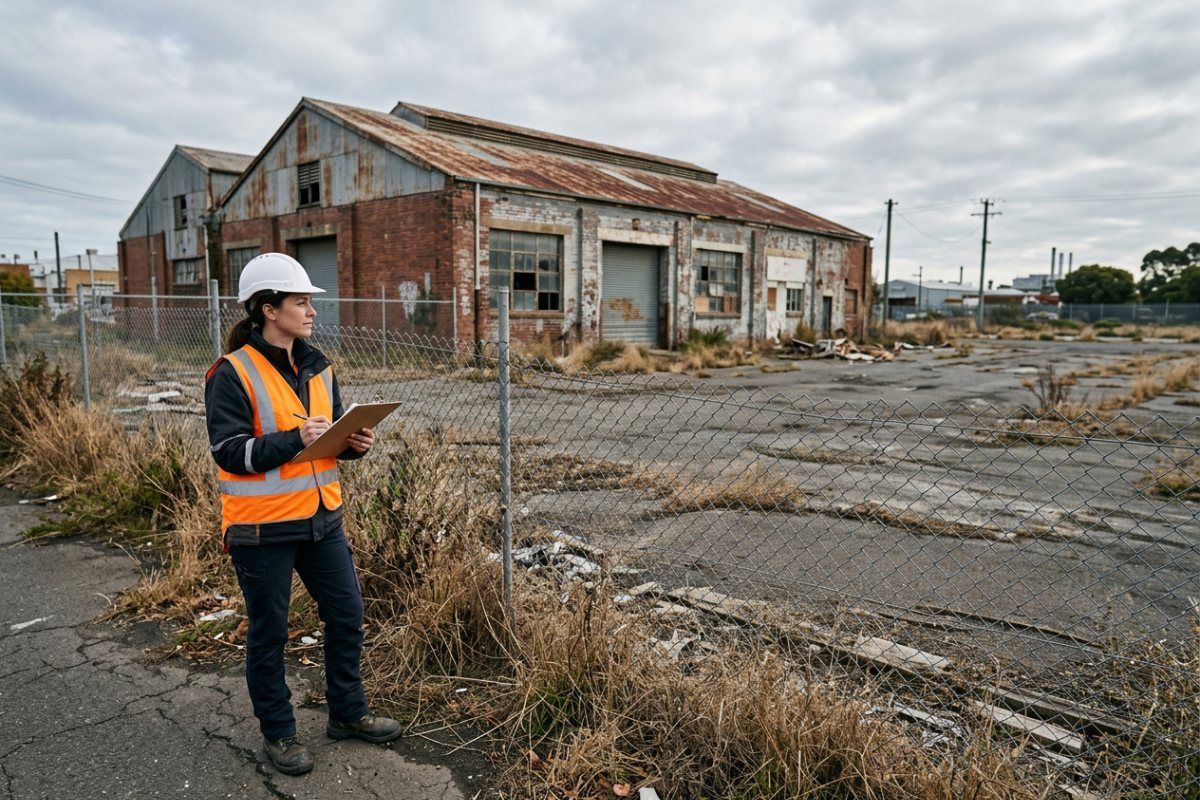
A Phase 1 environmental site assessment is the investigation that tells you whether a property carries environmental risk you don't yet know about. A problem discovered after you close the deal costs far more to fix than it would have to find in advance. That's why environmental due diligence is standard in commercial real estate.
It's also what our Phase I Environmental Site Assessment services are for. This guide walks through what a Phase I ESA is, what it investigates, who needs one, how the process works, what the report tells you, and what happens if it turns up a problem.
Key Takeaways
- A Phase 1 ESA identifies potential environmental concerns through historical research, database review, site observations, and interviews. It doesn't involve soil or groundwater sampling.
- Not every Phase 1 leads to a Phase 2. Further testing only happens when a recognized environmental condition (REC) turns up.
- Completing due diligence before closing gives buyers far more negotiating leverage than finding a problem afterward.
- Lenders frequently require a Phase 1 as part of underwriting, and buyers without a lender requirement often commission one anyway because it's pretty much always a good idea.
- Finding a REC doesn't automatically mean confirmed contamination or a dead deal. It calls for professional interpretation and, often, a targeted follow-up investigation.
What Is a Phase 1 Environmental Site Assessment?
A Phase 1 environmental site assessment is a structured environmental due-diligence investigation. It's built to identify recognized environmental conditions (RECs) tied to a property. The process follows the current ASTM standard, which EPA recognizes as satisfying federal due-diligence requirements, and relies on historical research, regulatory database review, property observations, and interviews. It doesn't involve collecting soil or groundwater samples.
When physical sampling and lab testing are needed, it's usually as part of a Phase 2 because the Phase 1 identified potential concerns.
What Does a Phase 1 ESA Look For?
A Phase 1 assessment looks for current or past activities that may have released hazardous substances or petroleum products. Common examples include former gas stations, dry cleaners, manufacturing facilities, underground storage tanks, auto repair shops, industrial activities, and nearby contaminated properties.
Why Is a Phase 1 Environmental Site Assessment Important?
Environmental due diligence helps buyers, lenders, developers, and investors understand potential liabilities before a transaction closes. Catching concerns early can change negotiations, financing, property value, and the transaction timeline.
There's a legal angle too. Buyers who complete appropriate due diligence before purchase may qualify for the innocent landowner defense and related liability protections under CERCLA, the federal Superfund law. Those protections and the All Appropriate Inquiries requirements behind them are detailed and fact-specific, so we recommend working with qualified legal counsel to see how they apply to your particular transaction.
When Do You Need a Phase 1 ESA?
A Phase 1 ESA gets requested most often for commercial real estate purchases, refinancing, development, redevelopment, and property transfers. Lenders and financial institutions frequently require environmental due diligence as part of underwriting, since contamination affects a property's value as collateral. The SBA's own lending procedures spell out environmental review requirements for 7(a) and 504 loans, and many private lenders follow a similar standard.
Buyers sometimes commission an assessment even without a lender requirement, since cash buyers still face real financial exposure if contamination surfaces after closing.
Should You Get a Phase 1 ESA Before Buying Commercial Property?
Completing environmental due diligence before closing gives you far more negotiating leverage than discovering a problem afterward. Findings from a Phase 1 can change the purchase price, lead to environmental indemnities in the purchase agreement, move remediation responsibility to the seller, or in some cases lead a buyer to walk away entirely.
Build enough time into the transaction timeline for the work. A rushed Phase 1 is more likely to miss something, and an assessment completed after closing offers no leverage at all.

What Does a Phase 1 Environmental Site Assessment Include?
A Phase 1 combines several distinct components, each contributing a different piece of the overall risk picture.
| Phase 1 ESA Component | What It Examines | Why It Matters |
|---|---|---|
| Historical research | Previous property uses and development | Identifies potential historical sources of contamination |
| Regulatory/database review | Environmental records and listings | Identifies documented or reported environmental concerns |
| Site reconnaissance | Current physical conditions | Looks for visible indicators of environmental risk |
| Interviews | Knowledge from owners, occupants, and others | Can uncover information unavailable through records |
| Report preparation | Findings and conclusions | Documents identified environmental conditions and recommendations |
The Phase 1 ESA Process: Step by Step
The environmental site assessment process runs from initial property research through delivery of the final report. A qualified consultant combines multiple sources of evidence rather than relying on a single database or a single site visit, which is what makes the findings reliable. Giving the consultant accurate property history and access to relevant records up front speeds the whole process.
1. Review Historical Property Information
Historical sources include aerial photographs, topographic maps, city directories, fire insurance maps, and property records that reveal concerns a present-day inspection wouldn't catch.
2. Search Environmental Databases and Regulatory Records
Federal, state, and local databases flag reported spills, hazardous waste sites, underground storage tanks, and other environmental records tied to the property or nearby sites. Appearing in a database doesn't automatically mean a property is contaminated. The consultant interprets each record in context, since databases often include issues that have been resolved, and have little relevance to the subject property.
3. Conduct a Site Reconnaissance
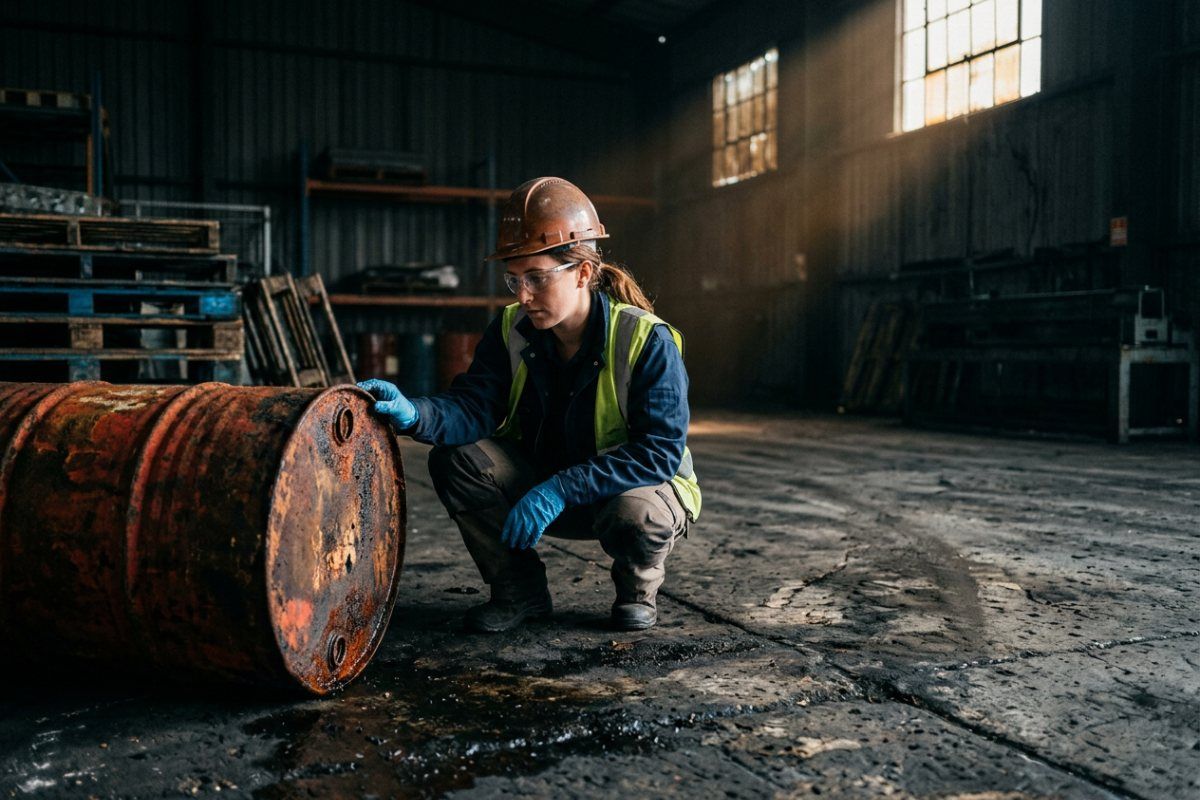
During the physical inspection, consultants look for staining, stressed vegetation, drums or containers, tanks, unusual odors, floor drains, electrical equipment, and other indicators. Both the subject property and relevant adjoining properties get inspected, since contamination doesn't respect property lines.
4. Interview Relevant Parties
Current owners, occupants, property managers, and other knowledgeable parties can offer information that doesn't show up in any public record. Questions typically cover past operations, spills, storage tanks, waste disposal, and prior environmental investigations on the property.
5. Analyze Findings and Prepare the Report
The consultant weighs the accumulated evidence and determines whether identified conditions meet the definition of a REC or warrant further consideration. You receive documented research, observations, conclusions, limitations, and recommendations.
Understanding Recognized Environmental Conditions (RECs)
Finding a REC doesn't automatically mean confirmed contamination. It flags a condition tied to the potential or likely presence of hazardous substances or petroleum products, which is a meaningfully different thing from a confirmed problem. The current standard draws a clear line between these designations, and getting them right matters for how a finding gets treated.
RECs, HRECs, and CRECs carry specific technical and legal meaning under the current ASTM standard. Have an experienced environmental professional walk through what a given finding means for your specific property.
REC vs. HREC vs. CREC
| Term | General Meaning | Why It Matters |
|---|---|---|
| REC | The presence or likely presence of hazardous substances or petroleum products at a property due to a release, or under conditions that pose a threat of a future release | May warrant additional investigation, such as a Phase 2 ESA |
| HREC | A past release addressed to the satisfaction of the applicable regulatory authority, meeting unrestricted use criteria with no controls in place | Provides historical context without indicating a current concern |
| CREC | A past release addressed to regulatory satisfaction, but with hazardous substances remaining in place under required controls | May carry ongoing compliance or monitoring obligations tied to those controls |
What a Phase 1 ESA Does Not Include
A standard Phase 1 ESA is generally non-intrusive. It doesn't automatically involve soil, groundwater, vapor, or building-material sampling. Lab testing and physical sampling typically belong to a follow-up investigation, most often a Phase 2 ESA, conducted when the Phase 1 flags concerns that need a closer look.
Environmental due diligence is also separate from other property assessments. Asbestos surveys, lead-based paint inspections, mold assessments, and industrial hygiene evaluations each address different concerns and are typically scoped on their own, even when they get bundled into the same due-diligence process.
What Happens If a Phase 1 ESA Finds a Potential Environmental Problem?
A concerning finding doesn't automatically mean the property is unsafe or that the deal has to end. The federal rules at 40 CFR Part 312 don't even require a Phase 2 in every case. The next step is figuring out whether additional investigation makes sense based on the nature, location, history, and severity of the condition.
Findings that meet the definition of a REC can lead to a Phase II environmental site assessment, or a narrower investigation targeted at a specific concern. The Phase 1 report will usually include the consultant's recommendation.
How Long Does a Phase 1 ESA Take?
Turnaround depends on property complexity, historical records available, database findings, consultant availability, site access, and your transaction deadline. A simple site with a clean history moves faster than a complex one with an extensive industrial past.
Engage a consultant early enough to leave room for historical research, the site visit, report preparation, and any follow-up questions along the way. That buffer keeps a compressed timeline from forcing corners to be cut.
How Much Does a Phase 1 Environmental Site Assessment Cost?
Phase 1 ESA cost varies with property size, location, historical complexity, current and former uses, site accessibility, and how much research the property demands. Two properties of similar size can carry very different price tags depending on how much digging their respective histories require.
The cheapest option isn't necessarily the best value if it skips investigation or documentation. An incomplete Phase 1 that misses a REC gives you none of the liability protection a proper assessment does. A project-specific quote is the more reliable way to budget for the work.
What Can Increase the Cost of a Phase 1 ESA?
Large or complex properties, unusual historical uses, extensive regulatory records, multiple parcels, difficult site access, and tight deadlines all push costs higher. If the Phase 1 recommends further investigation, that work sits outside the standard Phase 1 scope and carries its own cost.

How to Choose a Phase 1 ESA Consultant
Understanding Phase 1 ESA requirements helps you evaluate consultants. A good checklist covers experience, qualifications, familiarity with the applicable ASTM standard, geographic coverage, reporting quality, communication throughout the process, and the ability to run follow-up investigations if the Phase 1 calls for them.
Choosing on price alone is a mistake. A consultant who knows a property's industry and typical risks will often catch issues a generic provider misses. We bring decades of environmental, health, and safety experience to this work, from the first records search through the final report.
Phase 1 ESA Checklist for Property Buyers
Gathering the following before you contact a consultant speeds the process and improves the quality of the resulting assessment. Sharing prior environmental documentation up front helps most. Don't assume a consultant can locate every historical record on their own.
| Before the Assessment | Why Provide It |
|---|---|
| Property address and legal description | Establishes the correct assessment area |
| Current and historical use information | Helps identify potential environmental concerns |
| Previous environmental reports | Prevents duplicating existing work |
| Known spills or environmental incidents | Provides important site context |
| Lender requirements | Helps ensure the assessment meets transaction requirements |
| Transaction deadline | Allows appropriate scheduling |
Common Phase 1 ESA Mistakes to Avoid
- Waiting until the last minute. Compressed timelines create unnecessary pressure on the transaction and raise the odds that something gets missed.
- Assuming a newer building means a clean site. Historical land use can still matter regardless of what's currently standing on the property.
- Treating a Phase 1 as a guarantee. An ESA is a professional due-diligence investigation with a defined scope and real limitations, not a warranty against future problems.
- Ignoring adjacent properties. Nearby facilities and their history can affect the subject property even when the subject property itself has always been clean.
- Walking away from a property the moment a REC turns up. A REC calls for professional interpretation and, where it makes sense, targeted follow-up investigation, not an automatic exit.
Conclusion
A Phase 1 environmental site assessment is a foundational commercial real estate due-diligence tool. It identifies potential environmental risks before they become unexpected financial or regulatory problems, working through historical research, regulatory review, site reconnaissance, interviews, professional analysis, and documented reporting.
Property buyers, lenders, and developers who bring in an experienced environmental consultant early put themselves in the strongest position to catch issues and figure out the right next step, whether that's moving forward with confidence, renegotiating terms, or ordering further investigation.
We're available to help you evaluate a property and determine the right next step for your transaction:
- EHS for Property Transactions and Redevelopment
- Environmental Investigations and Remediation
- Environmental Regulatory Compliance
- EHS Services
- Industrial Hygiene and Safety Consulting
FAQs
Is a Phase 1 ESA required by law when buying commercial property?
No federal law mandates a Phase 1 ESA for every commercial transaction. Most buyers get one because a lender requires it, because it's a prerequisite for CERCLA liability protections, or because the potential cost of undiscovered contamination far outweighs the cost of the assessment. Certain state and local rules, along with specific loan programs, may impose their own requirements.
Can a Phase 1 ESA find mold, asbestos, or lead?
Not as part of the standard scope. A Phase 1 ESA focuses on recognized environmental conditions tied to hazardous substances and petroleum products. Asbestos surveys, lead-based paint inspections, and mold assessments are separate, specialized evaluations. They're often ordered alongside a Phase 1 for a property transaction, but they follow different methods.
Does every Phase 1 ESA require a Phase 2 ESA?
No. A Phase 2 only makes sense when the Phase 1 identifies a recognized environmental condition that calls for further investigation. Many Phase 1 assessments wrap up with no RECs identified, and in that case no additional testing is needed to satisfy environmental due diligence for the transaction.
Can I use an old Phase 1 ESA for a new property transaction?
Generally not without an update. Environmental site assessments have a limited shelf life under the applicable ASTM standard, and conditions at a property can shift a lot over time. A new transaction typically calls for a new Phase 1 or an update to a prior one, depending on how much time has passed.
What should I do if my Phase 1 ESA identifies a REC?
Work with the environmental professional who prepared the report to understand what the finding means for your specific property. A REC doesn't automatically mean confirmed contamination or rule out the purchase. It typically leads to a recommendation, often a Phase 2 investigation, and from there you can make an informed call on how to proceed.