
Contaminated soil shapes what a property is worth, what can be built on it, what a lender will finance, and what obligations an owner inherits at closing. Soil remediation methods exist to bring those risks back to acceptable levels.
There's no universal process that's right for every site. The right approach depends on the contaminant, its concentration, the soil itself, how deep the contamination goes, whether groundwater is involved, and what the owner plans to do with the property.
This environmental investigations and remediation guide follows the same sequence as a real project: investigation, planning, treatment, monitoring, and regulatory closure.
Key Takeaways
- Investigation comes before technology selection.
- Different soil remediation methods accomplish different things.
- In-place treatment is often viable. Bioremediation, chemical and thermal treatment, and vapor extraction can all work without excavation when subsurface conditions suit them.
- Treatment is not the end of the project. Confirmation sampling, monitoring, documentation, and regulatory review determine whether a site reaches closure.
What Is Soil Remediation?
Soil remediation is the process of treating, removing, containing, or otherwise managing contaminated soil so that environmental and human-health risks drop to acceptable levels. What counts as acceptable is defined by regulators and by how the property will be used.
Investigation determines what contamination exists and where it is. Remediation is what you do about it.
Objectives differ site to site. A parcel headed for industrial reuse carries different cleanup targets than one that's for housing. Land use, regulatory requirements, contaminant type, exposure pathways, and redevelopment plans all shape what the remedy has to accomplish.
How Contaminated Soil Is Assessed Before Remediation
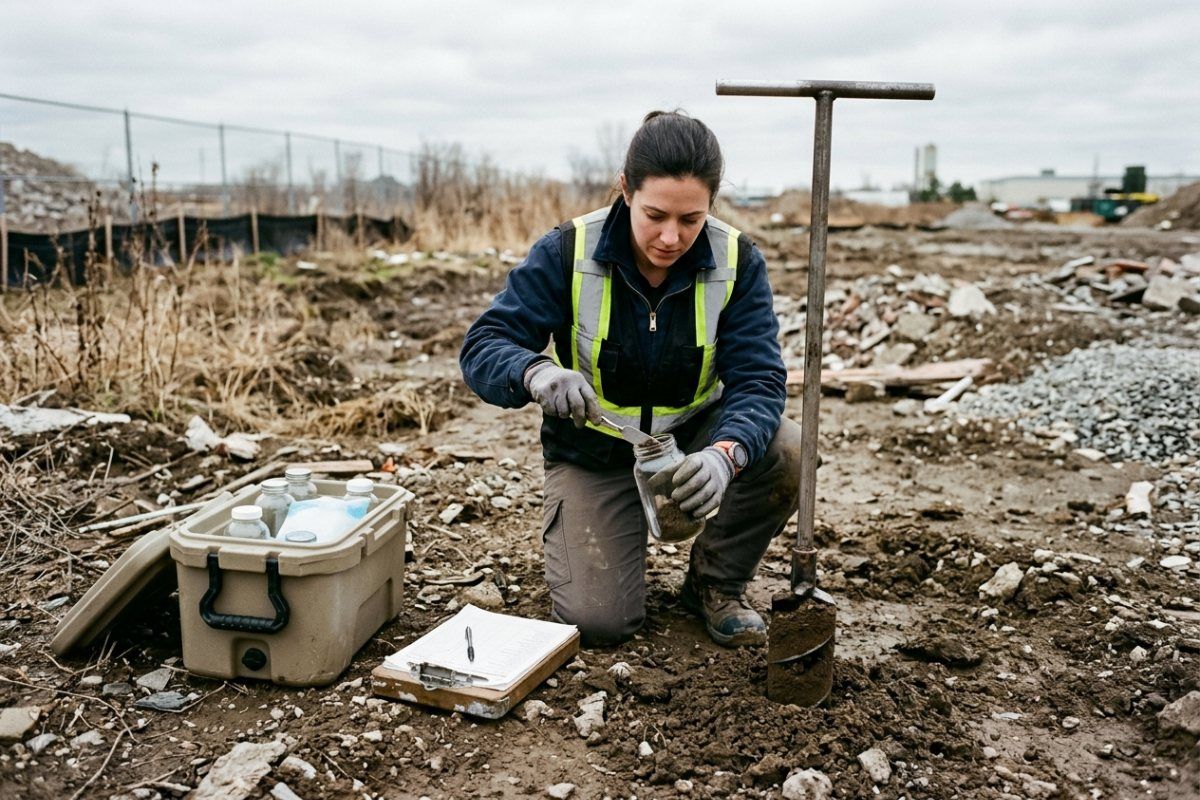
Contaminated soil remediation begins with understanding the problem, not with choosing a technology. A cleanup method selected before the contamination is characterized is a guess, and guesses in this field get expensive once equipment is mobilized.
Site characterization covers soil sampling, laboratory analysis, contaminant delineation, groundwater evaluation where relevant, and assessment of how people or ecological receptors could be exposed. Much of this work happens during a Phase II environmental investigation, and the data it produces drives both remedial design and cost planning.
Identifying the Contaminant and Its Distribution
Which technologies are technically feasible depends on what the contaminant is, how concentrated it is, how deep down it is, and how it spreads horizontally and vertically.
Scale matters as much as identity. A localized release confined to a few cubic yards near the surface presents a different engineering problem than a plume that has migrated across a property boundary or reached the water table.
Evaluating Soil and Site Conditions
Soil type, permeability, moisture, groundwater interaction, depth, and physical access all affect what can be done. Low-permeability clay resists the airflow vapor extraction depends on. A contaminated zone under an active building is reachable by very few methods.
This is why a technology that performs well at one site can be totally wrong for another, even if it has the same contaminant.
The Most Common Soil Remediation Methods
The types of soil remediation below are categories. Technology selection depends on investigation data, regulatory objectives, engineering feasibility, and lifecycle cost. EPA maintains detailed technical profiles for each of these approaches through its contaminated site cleanup resources.
One term worth defining up front: in-situ treatment means treating contaminated soil in place rather than excavating it. In situ soil remediation can reduce excavation, hauling, and surface disruption when subsurface conditions suit the selected technology. Several methods below can run either in situ or on excavated soil.
| Soil Remediation Method | Basic Approach | Best Suited For | Key Consideration |
|---|---|---|---|
| Excavation and disposal | Remove contaminated soil | Accessible, localized contamination | Transportation and disposal requirements |
| Soil vapor extraction | Remove volatile contaminants as vapor | Volatile organic compounds in suitable soils | Soil permeability and contaminant volatility |
| Bioremediation | Use biological activity to break down contaminants | Certain petroleum and organic contaminants | Environmental conditions must support biological activity |
| Chemical treatment | Chemically transform or destroy contaminants | Selected organic or inorganic contaminants | Requires contaminant-specific treatment design |
| Thermal treatment | Apply heat to remove or destroy contaminants | Certain persistent or volatile contaminants | Energy and equipment requirements |
| Soil washing | Separate contaminants from soil particles | Certain contaminated soils | Requires appropriate soil characteristics |
| Stabilization/solidification | Immobilize contaminants within soil | Selected contaminants where removal is impractical | Reduces mobility rather than necessarily removing contaminants |
| In-situ treatment | Treat contamination without excavation | Sites where excavation is disruptive or impractical | Requires suitable subsurface conditions |
Excavation and Off-Site Disposal
Excavation removes the problem physically. Contaminated soil is dug out, characterized as necessary, transported, and managed at a permitted facility. The logic is simple and the result is verifiable, which is part of its appeal.
It works best for accessible, localized contamination, and gets difficult when contamination runs deep, spreads widely, or sits beneath structures that have to stay standing. Planning has to account for excavation safety, transportation, disposal requirements, replacement soil, site disruption, and cost, which scales with volume.
Bioremediation for Contaminated Soil
Bioremediation uses microorganisms to break down certain contaminants into less harmful compounds. The organisms do the work; the engineering consists of giving them conditions where they can.
Effectiveness depends on contaminant characteristics, available oxygen or other electron acceptors, nutrients, moisture, temperature, and whether a viable microbial population is present. The Navy's remediation technology resources document applicability and limitations across a range of these approaches.
Bioremediation can be attractive for certain organic and petroleum contaminants, and it can run in place or on excavated soil. The tradeoff is time: it often requires extended treatment periods and sustained monitoring.
Soil Vapor Extraction and Volatile Contaminants
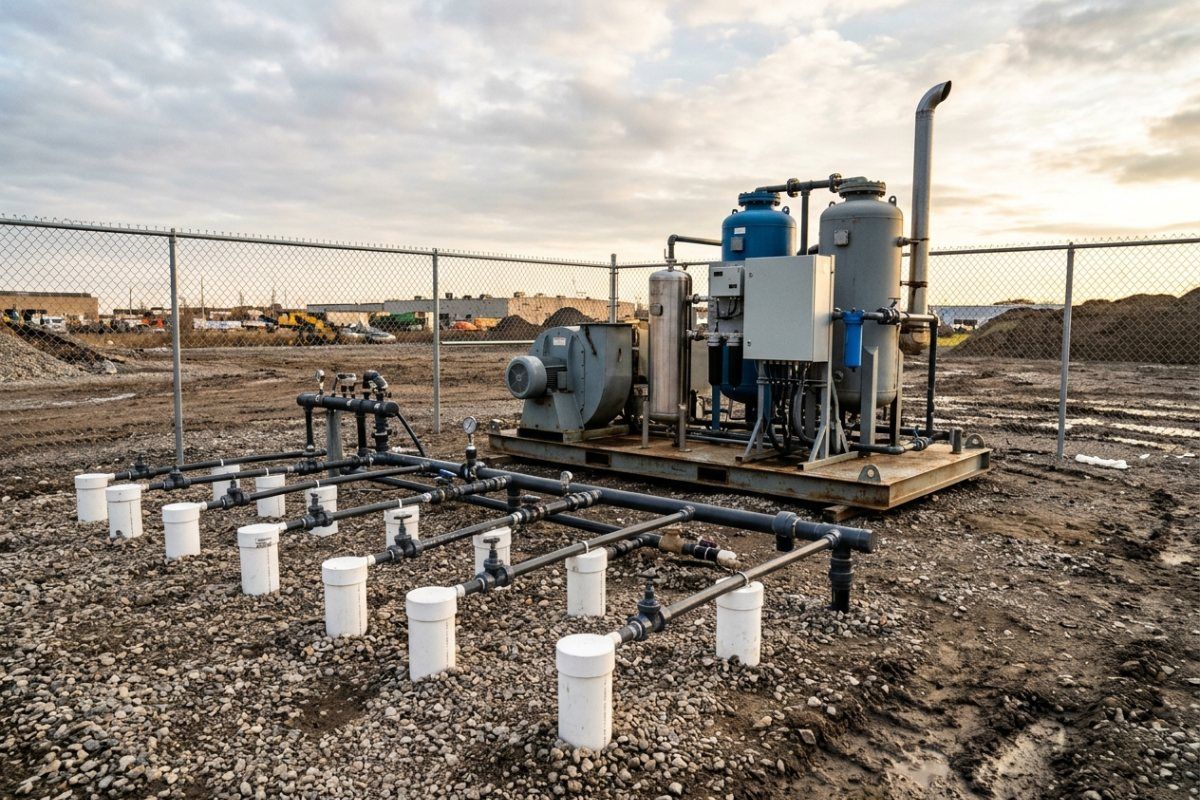
Soil vapor extraction applies a vacuum to unsaturated soil, inducing airflow that carries volatile contaminants out of the subsurface as vapor. Extraction wells pull the vapor, a vacuum system drives the flow, and a treatment unit handles the captured vapor before discharge.
Whether it fits comes down to physics. The contaminant has to be volatile enough to partition into the vapor phase, and the soil has to be permeable enough to let air move through it. Depth and groundwater conditions affect well design and system performance.
Chemical, Thermal, and Soil Washing Technologies
These are the more tech-intensive soil remediation techniques, and each requires detailed engineering evaluation and contaminant-specific design.
Chemical treatment uses chemical reactions to transform or immobilize contaminants, which makes it heavily dependent on contaminant chemistry. Thermal treatment applies heat to volatilize or destroy contaminants, and brings its own demands around energy use, equipment, and emissions management. Soil washing separates contaminants from soil particles through physical and chemical processes, and depends on soil composition and how tightly contaminants bind to it. Technical and regulatory guidance for several of these is published by the Interstate Technology and Regulatory Council.
An important distinction: some methods remove contaminants, some destroy or transform them, and some only reduce their mobility. Those are three different outcomes, both in the short and long terms.
Stabilization and Solidification
Stabilization and solidification reduce contaminant mobility by binding contaminants within a treated material or making them physically less accessible. The contamination stays on site; what changes is its ability to move.
That makes it fundamentally different from removal. Because the contaminant remains in place, long-term monitoring and institutional or engineering controls often stay part of the picture depending on the remedy and what regulators require.
How to Choose the Right Soil Remediation Method
Technology selection follows site characterization and a defined set of cleanup objectives.
The major selection factors are contaminant type and concentration, soil characteristics, contamination depth, groundwater interaction, site accessibility, future land use, regulatory requirements, schedule, and cost. Most projects weigh several of these against each other rather than optimizing for one.
Comparing alternatives means evaluating each on effectiveness, implementability, risk reduction, environmental impact, and lifecycle cost. A method that treats contamination thoroughly but can't be installed at the site isn't a real option, and neither is one that's cheap to install but expensive to operate for twenty years.
Soil Remediation vs. Containment: What's the Difference?
Remediation removes or treats contamination. Containment controls exposure or contaminant movement without necessarily reducing the contaminant mass. Both are legitimate responses, and many sites use some of each.
Containment, engineered controls like caps or barriers, and institutional controls like deed restrictions can all form part of a corrective-action strategy. They appear most often where removal is impractical, too disruptive, or unnecessary given how the property will be used.
Cleanup does not mean excavating every molecule of contamination. Regulatory objectives and risk management determine what counts as an acceptable remedy, and for many sites that standard can be met without total removal.
What Happens After the Remediation Treatment?
Installing a treatment system or hauling away contaminated soil is not the end of a remediation project. It's the point where the project starts generating evidence about whether it worked.
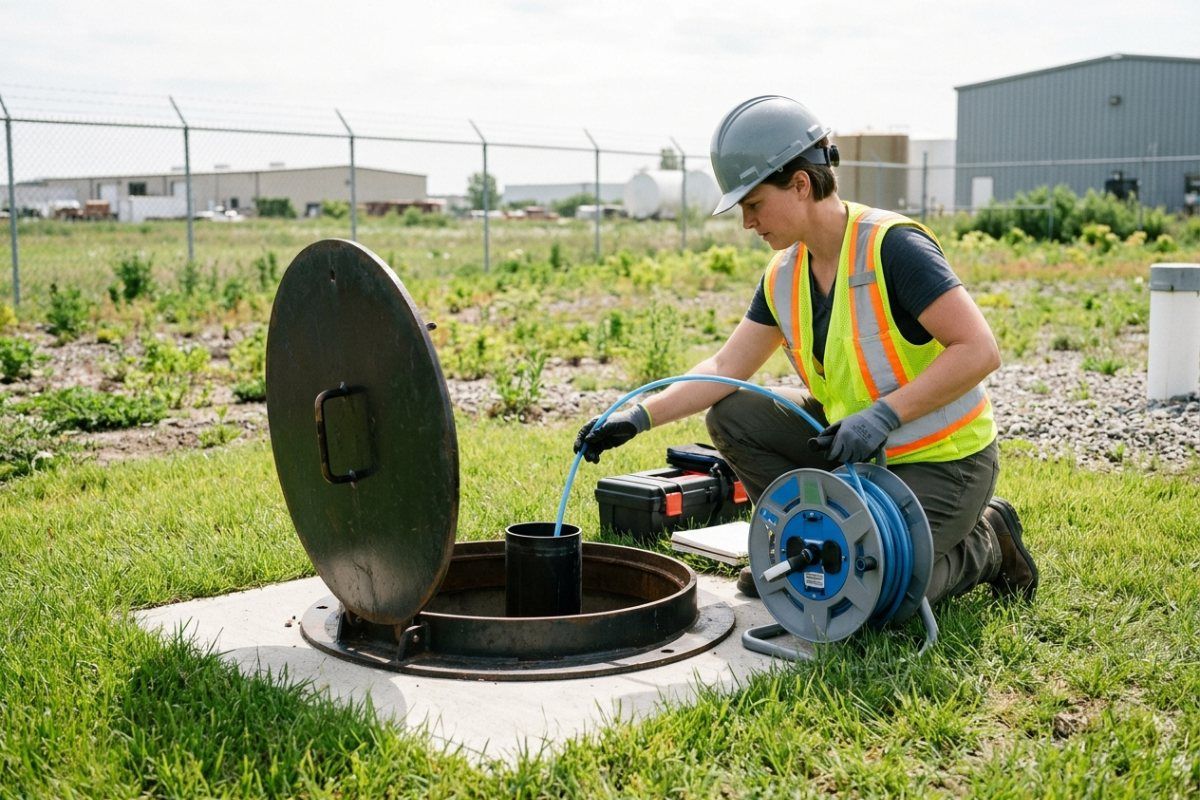
Confirmation sampling verifies that remaining soil meets cleanup objectives. System monitoring and performance evaluation track whether an operating remedy is doing what it was designed to do. Groundwater monitoring continues where applicable. All of it gets documented and submitted for regulatory review. Federal remedy selection and post-remedy requirements are set out in the National Contingency Plan, with state programs adding their own requirements.
Ongoing monitoring is what demonstrates whether the selected remedy is achieving its objectives, and whether additional action is required before a site can close.
Common Challenges That Can Complicate Soil Remediation
Most complications on a contaminated site remediation project trace back to incomplete information. Heterogeneous soil, unknown contaminant sources, shifting groundwater, and difficult access are all things that can come out after work begins.
Unrealistic cleanup timelines and cost assumptions create their own problems. The practical response is adaptive management. Remediation plans get adjusted when monitoring or further investigation produces new information, and projects that build in that flexibility handle surprises better than projects locked into a fixed approach.
When Should a Business or Property Owner Bring in an Environmental Consultant?
The common triggers are suspected contamination, environmental due diligence on a transaction, redevelopment planning, regulatory concerns, a spill, historical industrial use at the property, underground storage tanks, or laboratory results nobody expected.
Contaminated-site remediation connects directly to commercial real estate: acquisition, financing, redevelopment, and property due diligence all turn on what's in the ground. Identifying environmental conditions early lets owners and developers evaluate costs, schedules, liabilities, and redevelopment constraints while they still have options. EPA's Brownfields Road Map lays out how site investigation and cleanup fit into redevelopment generally.
Technical expertise is what connects investigation findings to remediation alternatives, regulatory requirements, cost projections, and implementation. Our property transaction and redevelopment services cover that full arc: Phase I assessments, Phase II investigations, remediation evaluation and cost projections, remedial approach design, implementation, monitoring, and regulatory closure support.
Soil Remediation Planning Checklist
The stages below give a property owner or project manager a working map of how a remediation project progresses. It's a framework for understanding the sequence, not a substitute for professional environmental assessment.
| Stage | Key Question |
|---|---|
| Investigation | What contaminants are present and where? |
| Characterization | How extensive is the contamination? |
| Risk Assessment | Who or what could be exposed? |
| Remedial Objectives | What must the cleanup accomplish? |
| Technology Selection | Which method fits the site conditions? |
| Remedial Design | How will the selected approach be implemented? |
| Implementation | Is the remedy being installed and operated correctly? |
| Monitoring | Is the remedy achieving its objectives? |
| Closure | Have regulatory and site requirements been satisfied? |
Documentation matters at every stage. Decisions, sampling results, treatment performance, and regulatory communications all need a record, because closure depends on being able to demonstrate what was done and why.
Conclusion
There is no single best soil remediation method. The right approach depends on contamination characteristics, site conditions, risk, regulatory requirements, and what the project needs to accomplish. A method that resolves one site cleanly can be the wrong call fifty miles away.
Informed remediation planning reduces environmental risk, supports better redevelopment decisions, and makes project management more predictable. If you're evaluating a property or planning work on a site with known or suspected contamination, our EHS services team can help you determine the right next step.
FAQs
How long does soil remediation usually take?
It varies widely. Excavation of a small, accessible area can finish in days or weeks. Bioremediation and other in-place treatments often run for months or years, and sites with groundwater involvement can require monitoring well beyond the active treatment period. Site complexity, contaminant type, regulatory review, and the chosen method all drive the timeline.
How much does contaminated soil cleanup cost?
Cost depends on contamination extent, contaminant type, soil volume, site access, the selected technology, and disposal or treatment requirements. Excavation costs scale with volume and hauling distance. In-place treatments trade lower upfront cost for longer operating periods. A site-specific estimate requires characterization data, which is one more reason investigation comes first.
Can contaminated soil be remediated without digging it up?
Often, yes. In-situ methods including bioremediation, chemical treatment, thermal treatment, and soil vapor extraction all treat contamination in place. Whether they apply depends on subsurface conditions, contaminant properties, and depth. Some sites suit in-place treatment well; others don't, and excavation remains the more practical route.
How do you know if soil contamination is affecting groundwater?
Groundwater sampling, usually through monitoring wells installed during site investigation. Contaminant mobility, soil permeability, depth to the water table, and time since the release all affect whether contamination has migrated. Where groundwater impact is confirmed or suspected, it typically expands both the scope of the remedy and the monitoring that follows.
Who is responsible for contaminated soil on a commercial property?
Responsibility depends on the facts and the applicable law, and it can extend to current owners, past owners, and operators under federal and state statutes. This is a legal question with real financial consequences, so it belongs with qualified counsel. Completing environmental due diligence before acquiring a property is what preserves certain liability protections.

Higgins and Associates LLC